Key Takeaways
- Trust drives adoption. When sellers trust the content is accurate and current, engagement increases dramatically.
- AI role plays turn passive learning into active practice, helping reps improve faster.
- Integrating enablement into existing workflows makes scaling easier for lean teams.
- Specific, targeted AI coaching delivers stronger learning outcomes than generic training.
How a Team of One Uses Agentic AI to Transform Revenue Enablement
Most enablement teams don’t struggle because they lack content. They struggle because sellers don’t trust it, can’t find it, or don’t know how to use it in real conversations. That challenge becomes even harder when you’re running enablement as a team of one. That was the reality Patrick faced as Global Head of Sales Enablement at Tufin, a cybersecurity company helping enterprises manage and automate network security policies across complex environments. He supports about 56 direct sellers and another 40 to 50 people in customer success and sales engineering.
Tufin operates in a highly technical market. Their sellers need to explain advanced concepts like micro segmentation, cloud security, and network posture management to sophisticated buyers. The business moves fast, and the messaging changes with it.
Patrick is responsible for enabling the entire go-to-market organization largely by himself. Instead of trying to scale through more headcount, Tufin leaned into Agentic AI.
The result?
- Platform engagement increased from roughly 30% to nearly 90%
- Enablement launch cycles dropped from 30+ days to 1–2 weeks
- Sellers practiced messaging repeatedly through AI role plays
- Marketing gained direct visibility into field conversations
- Enablement tied certifications and coaching directly to revenue outcomes
The Problem: Sellers Stopped Trusting the System
When Patrick joined Tufin, the company already had a legacy content management system in place. On paper, everything looked organized. In practice, version control broke down. Old files sat beside new ones, stakeholders edited outside the platform, and reps didn’t know which materials were current. At one point, a seller looking for a pricing document skipped the platform entirely and emailed coworkers instead. Someone responded with a three-year-old price list.
That moment captured the bigger issue. Once trust disappears, sellers stop engaging.
“Our reps got confused. They stopped coming into it.”
They could also see clicks, but not outcomes: which content influenced deals, whether sellers understood the messaging, or how training connected to performance.
The Turning Point: Meet People Where They Already Work
Tufin evaluated multiple enablement platforms before choosing SalesHood, the AI-Powered Revenue Enablement Platform. The deciding factor was workflow. Every department at Tufin already collaborated through SharePoint. Product marketing, customer success, product teams, renewals, and revenue operations all managed their own environments there. Instead of forcing new behaviors, Patrick built enablement around existing workflows.
“We wanted to meet all of our stakeholders within their workflow.”
With SharePoint integration, content owners kept working where they always had, files synced into SalesHood automatically, and sellers always saw the current version. The migration was fast, too.
“Their information was already there. Once we set it up, boom, their entire file system was right there.”
Rebuilding Trust Through Personalized Content Experiences
Next came seller confidence. Patrick organized content by team, role, and situation.
New-logo sellers saw acquisition messaging, customer success saw renewal and expansion plays, and technical teams found product positioning built for them.
“All their playbooks, all their messaging, everything unique to them, they found it on day one.”
Weekly platform engagement went from around 30% to nearly 90%. But even though sellers could now find content, they still weren’t fully absorbing it. “It was still so much. It was a lot of reading.”
Why AI Role Plays Made the Difference
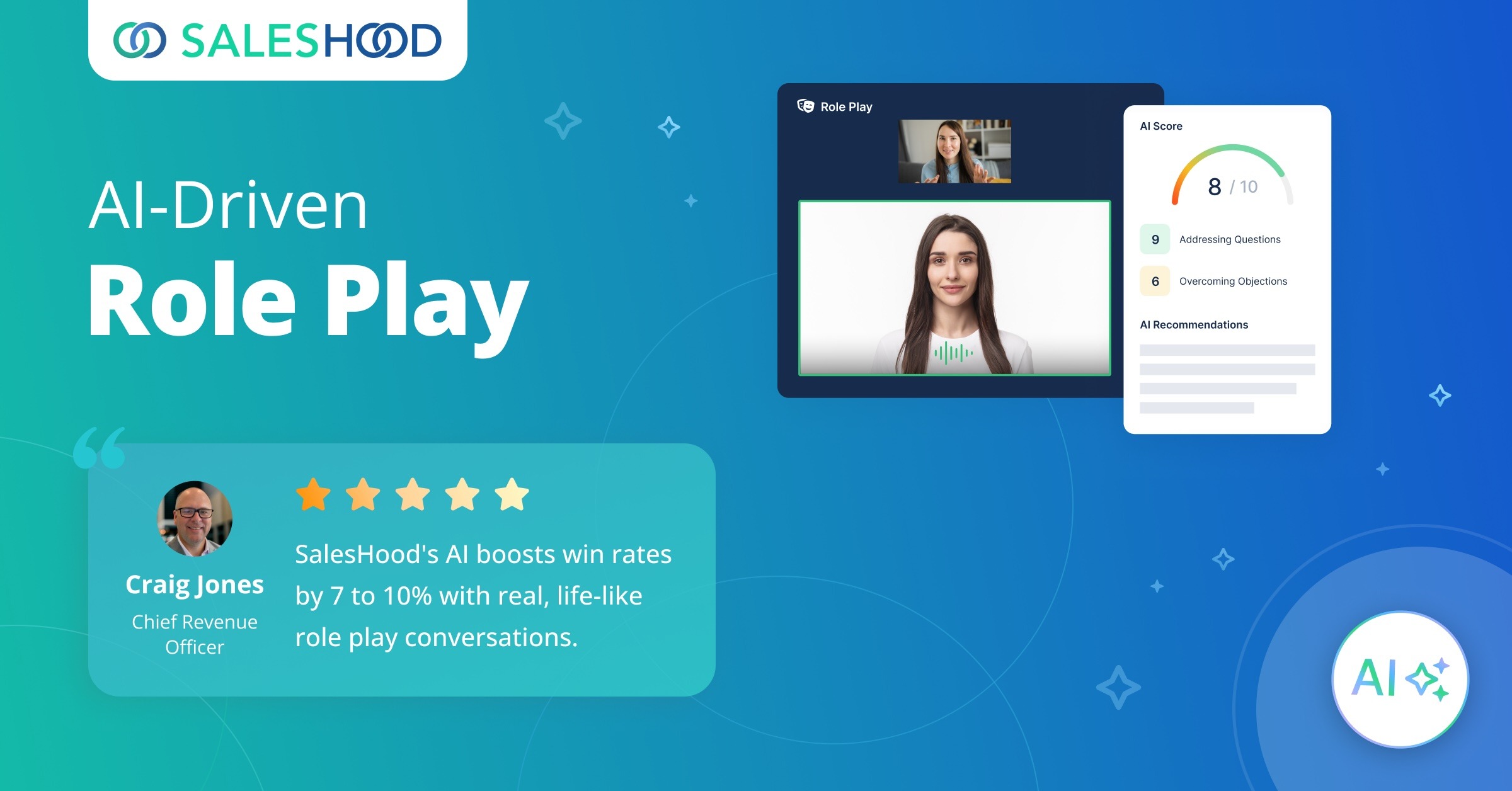
Content alone doesn’t change seller behavior. Practice does. So Tufin built AI coaching and role plays into its sales plays. Instead of reading messaging documents, reps rehearse conversations, get feedback, and repeat until their scores improve.
“Instead of reading, I’m doing.”
The competitive element surprised even Patrick. One top-performing seller completed the same role play eight to ten times trying to improve her score.
“She said, ‘You don’t have any idea how many times I took this thing because I wanted to win.’”
The AI evaluated:
- Relevance of messaging
- Persona alignment
- Outcome orientation
- Pain articulation
- Technical positioning
- Buyer conversation quality
Because Tufin sells technical products, specificity mattered. Generic AI coaching wasn’t effective enough.
“The more precise you got on what you wanted it to do, the better the training would be.”
Tufin built narrow role plays around specific scenarios, like a micro-segmentation conversation. Some AI buyers were collaborative. Others were intentionally difficult.
“I’ll tell it, ‘I want you to be really difficult.’”
Even Tufin’s technical teams were impressed by how realistic and technically accurate the AI interactions became.
Faster Enablement Cycles Changed the Business
Speed was the other big change.
“With AI in general, we’re able to take what comes from our product, get our marketing messaging done, get that into a role play, get that out in front of our sales team in a week, maybe two weeks, and that used to take us a month or more.”
Marketing also got a tighter loop with the field. Reps bring back customer reactions and objections sooner, so messaging changes based on real conversations.
“It connected them to what’s really happening in the field.”
From Content Metrics to Revenue Outcomes
The transformation wasn’t just about engagement. It was about measurable business impact. For the first time, Tufin could connect:
- Certifications
- Coaching completion
- Role play performance
- Messaging consistency
- Revenue outcomes
to actual business performance. “We knew they were getting certified. We knew they were out having the right messaging.”
The company specifically tied enablement efforts to:
- New customer acquisition
- Expansion selling
- Renewals
- Account management effectiveness
“There’s nothing like being able to actually see the growth, tie it back to results, and let marketing and sales leadership see that transition over time.”
The Bigger Lesson for Modern Enablement Teams
A common belief in enablement today is that AI is mostly for generating more content. Tufin’s experience points the other way. The value came from activating content, personalizing discovery, building practice into the work, and measuring improvement over time.
Patrick may technically be a “team of one.” But with AI built into his workflows, he works at the scale of a much larger team. “I’m doing way more with way less than I ever did before.” AI isn’t replacing enablement. It’s giving small teams more reach. For anyone still on a legacy content system, Patrick’s advice is simple:
“Change was the best catalyst. We just jumped in.”
Watch the full webinar replay to hear how Patrick scaled enablement at Tufin as a team of one with Agentic AI.
Frequently Asked Questions (FAQs)
How did Tufin improve enablement adoption?
What results did Tufin achieve?
Tufin increased platform engagement from roughly 30% to nearly 90%, reduced enablement rollout cycles from 30+ days to 1–2 weeks, and improved sales readiness through AI-powered coaching and certifications.
Why did Tufin invest in AI role plays?
The team realized sellers learn more effectively through practice than through reading static content. AI role plays allowed reps to rehearse conversations, receive feedback, and improve messaging in real time.
How did AI help a team of one scale enablement?
AI automated and accelerated content activation, coaching, certifications, and practice scenarios, allowing a single enablement leader to support a global sales organization efficiently.
What’s next for AI-driven enablement at Tufin?
Tufin sees the future in proactive AI coaching that can identify skill gaps, recommend refreshers, and reinforce learning based on real seller conversations.