What You'll Learn
In this guide, you’ll learn:
- How AI is reshaping revenue enablement organizations
- Best practices for team structure and reporting
- Modern enablement-to-seller ratios
- The skills to look for when hiring enablement leaders
- The roles and responsibilities of modern enablement teams
- Sample job descriptions for today’s revenue enablement leaders
- Five trends shaping the future of revenue enablement
Whether you’re building your first enablement function or modernizing an existing one, this guide will help you create a revenue enablement organization that scales expertise, improves execution, and delivers measurable business impact.
Writer’s Note (2026 Update): This guide has been completely updated to reflect how AI is reshaping revenue enablement organizations, roles, reporting structures, team ratios, and hiring.
The Modern Revenue Enablement Organization: How AI Is Reshaping Organizational Design, Roles and Team Ratios
Sales, marketing, revenue operations and enablement leaders ask us these questions all the time:
- Where should revenue enablement sit within the organization and who should it report to?
- What are the optimal enablement-to-seller ratios especially now in the age of AI?
- How is AI changing the size, structure and responsibilities of enablement teams?
- What skills should I look for when hiring an enablement leader?
- How should we organize enablement to maximize business impact?
- What does a modern revenue enablement organization look like?
In this guide, we’ll answer these questions and share practical ideas, organizational models, hiring profiles and job descriptions to help you build a high-performing revenue enablement team. There isn’t a one-size-fits-all answer. The right organizational structure depends on your company’s size, go-to-market strategy, stage of growth, leadership team and culture. It also depends on how decisions are made, where executive sponsorship exists, and how closely sales, marketing, customer success, and revenue operations work together. What’s changed over the past few years is the role of AI.
AI is fundamentally changing the economics of revenue enablement. Tasks that once required significant manual effort, from creating learning programs and role plays to answering seller questions and reinforcing coaching, are now automated or augmented. As a result, enablement professionals are supporting significantly more sellers while spending more time on strategic initiatives that drive business outcomes. Enablers have more agency to do more with less.
The role of enablement is evolving from program execution to business transformation. That means organizational design is no longer just about reporting structures and headcount. It’s about creating a team that scales expertise, improves execution, aligns the entire go-to-market organization and delivers measurable business impact.
This guide explores the organizational structures, team designs, roles and best practices we’ve seen work across hundreds of revenue organizations so you can determine what will work best for yours.
AI Is Redefining the Economics of Revenue Enablement
For years, organizations sized their enablement teams based largely on the number of sellers they needed to support. As organizations grew, enablement teams grew alongside them. AI is changing that equation. Instead of spending the majority of their time creating content, building training programs, answering repetitive questions or administering learning, enablement teams can now leverage AI to scale many of these activities across the entire revenue organization.
AI will help create learning programs, generate role plays, answer seller questions, personalize coaching, reinforce best practices, surface knowledge in the flow of work and provide insights that previously required significant manual effort. The result is greater leverage.
Enablement professionals are able to support significantly more sellers while spending more of their time partnering with revenue leaders, improving sales execution, coaching frontline managers, and driving strategic initiatives. The question is no longer: “How many enablement professionals do we need?” It’s becoming: “How do we maximize the impact of every enablement professional?”
Organizations that embrace AI won’t simply have smaller enablement teams. They’ll have enablement teams that are more strategic, more influential, and more deeply connected to business outcomes than ever before.
Revenue Enablement Team Ratios
One of the most common questions we hear is: “How many enablement professionals do I need?” The honest answer is: it depends. The right ratio is influenced by several factors:
- Product complexity
- Sales methodology
- Number of product lines
- Geographic distribution
- Rate of hiring and onboarding
- Partner enablement requirements
- AI maturity
- The responsibilities owned by the enablement team
Historically, many organizations staffed approximately one enablement professional for every 100 customer-facing employees. Companies launching new products, entering new markets, or experiencing rapid growth often invested much more heavily, sometimes supporting as few as 25 to 50 sellers per enablement professional. Today, AI is changing these economics.
As AI helps create onboarding programs, answer seller questions, generate role plays, reinforce coaching, personalize learning, and surface knowledge in the flow of work, enablement professionals can support significantly more people than ever before.
We’re already seeing organizations increase the number of customer-facing employees supported by each enablement professional. Ratios that once centered around 1:100 are moving toward 1:250 or 1:500, and in some organizations with mature AI strategies, even higher.
This doesn’t mean organizations should simply reduce headcount. It means the role of enablement is shifting. Instead of spending the majority of their time creating content and administering programs, enablement professionals are increasingly focused on driving behavior change, partnering with executives, improving manager effectiveness, and measuring business outcomes.
Suggested Revenue Enablement Ratios
| Enablement : Revenue Team | Typical Environment |
| 1:25–1:50 |
Hypergrowth, complex enterprise products, multiple new product launches, significant onboarding, highly regulated industries, limited AI adoption |
| 1:50–1:100 |
Multi-product organizations, regional sales teams, steady hiring, established enablement practices |
| 1:100–1:250 |
Mature organizations leveraging AI for knowledge delivery, onboarding, coaching, and practice |
| 1:250–1:500+ |
Organizations with mature AI-powered enablement, standardized sales processes, strong frontline managers, and highly scalable enablement operations |
These are directional guidelines, not hard rules. A 1:500 ratio is only achievable when AI, frontline managers, and repeatable processes work together to scale expertise across the organization.
Designing Your Revenue Enablement Organization
The next question we hear is: How should we structure the revenue enablement team, and where should it report? There isn’t a single “best” organizational structure. The right design depends on your business, your go-to-market strategy, and the outcomes you’re trying to achieve. While no two enablement organizations are identical, the highest-performing teams share one characteristic: They’re tightly aligned with the business priorities of the CRO, CMO, and Revenue Operations.
Revenue enablement is no longer just responsible for onboarding and training. Today’s enablement teams often own or influence onboarding, coaching, sales methodology, content strategy, AI adoption, buyer engagement, manager effectiveness, and readiness across the revenue organization.
As the scope of enablement expands, organizational alignment becomes even more important. When designing your enablement organization, consider the following factors:
- Company size and stage of growth
- Revenue growth objectives
- Product and sales complexity
- Hiring velocity and onboarding demands
- Geographic distribution of your teams
- AI maturity and technology stack
- Existing GTM organizational structure
- Executive sponsorship and decision-making authority
- The responsibilities owned by enablement (content, coaching, readiness, AI, buyer engagement, etc.)
- The strengths, experience, and leadership style of your executive team
Your organizational structure, sales process, and culture will all influence where enablement fits best. More importantly, your enablement organization should be designed around the outcomes you want to achieve, not simply where the function has historically reported.
The best enablement leaders don’t operate as a support function.
They serve as strategic partners to sales, marketing, customer success, product marketing, and revenue operations, helping align the entire go-to-market organization around consistent execution.
Sales Enablement Team Structure
Let’s talk a bit about how the sales enablement team should be structured. As mentioned, this depends on the size of your organization. Let’s say you have a very large organization, with over one thousand employees across many departments. Your sales enablement team would have to branch out in order to have a powerful and meaningful impact.
In such large organizations, sales enablement needs a lot of supporting pillars that coordinate with each other and every other department.
Sales enablement teams will be involved in:
- Strategic account planning
- Deal support
- Requests for proposals
- Business case development
- Providing and developing sales content
- Training and onboarding
- Requests for proposals
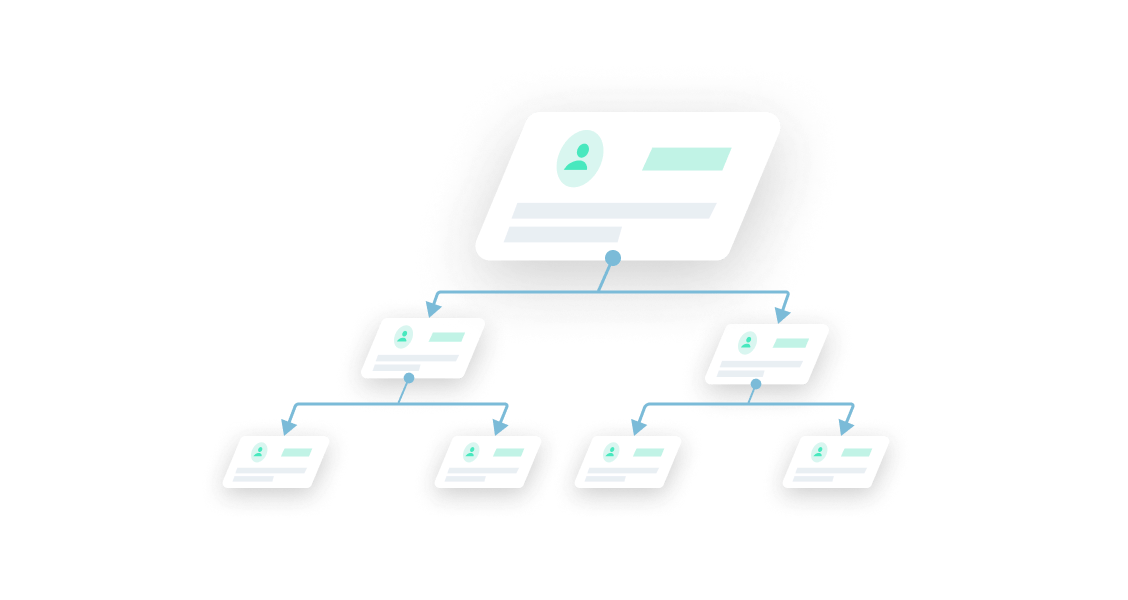
All of these different support pillars would have a competent, credible, and motivated leader who reports to a central head of sales enablement. This can be a separate entity, or this role can be taken over by anyone close to one of your main teams. The sales enablement team structure would look something like this:
Sales Enablement Team Leader
- Onboarding team
- Ongoing enablement by role team
- Regional coaches team
- Product enablement team
- Competitive team
- Deal support team
Revenue Enablement Team Structure
The structure of your revenue enablement organization should evolve as your company grows. A startup with a single enablement leader will naturally look very different from a global enterprise supporting thousands of customer-facing employees. As organizations scale, enablement expands from a single function into multiple specialized capabilities that work together to improve revenue execution. While every company organizes differently, mature revenue enablement organizations often include leaders responsible for:
- Revenue readiness and onboarding
- Sales methodology and coaching
- AI enablement and productivity
- Content strategy and knowledge management
- Buyer engagement and Digital Sales Rooms
- Product and solution enablement
- Competitive enablement
- Manager enablement
- Revenue enablement operations and analytics
These teams work together under a common strategy while partnering closely with Sales, Marketing, Revenue Operations, Product Marketing, Customer Success, and Product.
A modern revenue enablement organization might look like this:
Head of Revenue Enablement
- Revenue Readiness & Onboarding
- AI Enablement & Productivity
- Sales Methodology & Coaching
- Content Strategy & Knowledge Management
- Buyer Engagement
- Product & Competitive Enablement
- Manager Enablement
- Revenue Enablement Operations & Analytics
As AI continues to automate administrative work and scale knowledge delivery, these leaders spend less time creating programs and more time improving execution across the revenue organization. The best enablement organizations are no longer measured by the number of training programs they launch or the amount of content they publish. They’re measured by their ability to improve seller productivity, manager effectiveness, buyer engagement, and business outcomes.
Over time, we’re seeing enablement organizations evolve from centers of excellence into centers of execution.
Who Should Be Accountable for Revenue Enablement?
One of the most common questions we hear is: Who should own revenue enablement? Should it report to Sales? Revenue Operations? Marketing? Human Resources? The short answer is that there isn’t a universally correct answer. The more important question isn’t where revenue enablement reports. It’s who is accountable for making it successful.
Revenue enablement has evolved well beyond onboarding, trainin, and content management. Today’s enablement organizations are responsible for improving seller productivity, accelerating ramp time, coaching frontline managers, driving AI adoption, improving buyer engagement and ultimately influencing revenue performance. Because of that, revenue enablement requires executive sponsorship, cross-functional collaboration and clear accountability for business outcomes.
We see highly successful enablement organizations report to Sales, Revenue Operations, Marketing, and Human Resources. Each model can work when there is strong leadership, executive alignment and a shared commitment to improving revenue execution.
The reporting line matters. Executive sponsorship and cross-functional partnership matter even more.
Revenue Enablement Reporting to Sales or the CRO
This remains the most common organizational model and for many companies, it’s the right one. Reporting directly to Sales or the Chief Revenue Officer keeps enablement closely aligned with the people it supports every day. Priorities naturally center around onboarding, sales methodology, coaching, pipeline execution, manager effectiveness, and seller productivity. This model works particularly well for organizations focused on improving execution and driving consistent sales performance.
Pros
- Strong alignment with sales priorities and business goals
- Direct executive sponsorship
- Faster decision making
- Greater influence on frontline managers and sellers
- Easier to connect enablement initiatives to revenue outcomes
Potential Challenges
- Can become overly sales-centric
- Marketing, Customer Success, and Partner teams may feel disconnected
- Requires intentional collaboration across the broader go-to-market organization
Revenue Enablement Reporting to Revenue Operations
As Revenue Operations has become more strategic, we’re seeing more organizations align enablement with RevOps. This model works well when organizations emphasize data, operational excellence, AI adoption, and measurable business outcomes. Revenue Operations helps ensure enablement initiatives are prioritized based on performance data rather than intuition.
Pros
- Strong alignment with business metrics
- Better measurement of enablement impact
- Tight integration with CRM, forecasting, and analytics
- Scalable operational processes
Potential Challenges
- Can become overly focused on dashboards instead of behavior change
- Requires strong coaching and change management capabilities
- Risks positioning enablement as an operational function rather than a strategic GTM partner
Revenue Enablement Reporting to Marketing
Marketing-led enablement can be highly effective when messaging, positioning, content strategy, and product launches are primary business priorities. This model creates close alignment between Product Marketing, Demand Generation, and Enablement, helping ensure sellers communicate value consistently throughout the buyer journey.
Pros
- Strong partnership with Product Marketing
- Consistent messaging across marketing and sales
- Excellent support for product launches
- High-quality content creation and knowledge management
Potential Challenges
- Coaching and manager enablement may receive less attention
- Success can become measured by content production instead of seller performance
- Requires close partnership with Sales leadership to remain execution focused
Revenue Enablement Reporting to Human Resources or Learning
Although less common, some organizations successfully position enablement within Human Resources, Learning & Development, or Talent. This model works well for organizations focused on onboarding, leadership development, certifications, and building a culture of continuous learning.
Pros
- Strong expertise in learning and development
- Scalable onboarding and certification programs
- Supports employee growth and organizational culture
- Consistent development frameworks across the company
Potential Challenges
- Can lose proximity to day-to-day sales execution
- May be perceived primarily as a training organization
- Requires strong executive alignment with Sales and Marketing
Our Recommendation
In most organizations, we believe the Chief Revenue Officer should be accountable for revenue enablement because the primary objective is improving revenue performance. However, accountability should never mean ownership in isolation. The highest-performing enablement organizations operate as a cross-functional go-to-market capability with strong partnerships across:
- Sales
- Marketing
- Revenue Operations
- Product Marketing
- Customer Success
- Human Resources and Learning
As AI expands the scope and impact of revenue enablement, collaboration across these functions becomes even more important. The organizations seeing the greatest success aren’t asking, “Where should enablement report?” They’re asking:
“How do we align our entire go-to-market organization around consistent revenue execution?”

Hiring Modern Revenue Enablement Leaders
One of the questions I get asked most often from CEOs, CROs, and hiring managers is:
“What should I look for when hiring an enablement leader?”
Ten years ago, the answer was relatively straightforward. Find someone who could build onboarding, create great training, develop content, and roll out playbooks. Today, that’s only part of the job. As AI automates more of the administrative work, the role of the enablement leader is becoming far more strategic. The best enablement leaders don’t simply deliver programs. They improve execution. That requires a broader set of skills than ever before.
What Great Enablement Leaders Have in Common
The strongest enablement leaders consistently demonstrate the ability to:
- Translate business strategy into field execution.
- Influence executives and align cross-functional teams.
- Drive seller and manager behavior change.
- Scale coaching through frontline managers.
- Apply AI to improve productivity and execution.
- Measure business impact using data and analytics.
- Build trust and credibility with revenue teams.
These capabilities matter far more than where someone came from.
Great Enablement Leaders Can Come From Many Backgrounds
We’ve seen exceptional enablement leaders come from a variety of roles, including:
Sales Managers: Sales managers understand coaching, inspection, deal strategy, and how sellers actually execute in the field. They often make outstanding enablement leaders because they have immediate credibility with frontline teams.
Product Marketing: Product marketers excel at messaging, positioning, buyer personas, competitive intelligence, and storytelling. They help ensure sellers consistently communicate value throughout the buyer journey.
Sales Engineers and Solution Consultants: Solution consultants combine deep product expertise with customer-facing experience. They are trusted advisors who naturally coach sellers on discovery, demonstrations, technical positioning, and competitive differentiation.
Top Sales Performers: Top-performing sellers understand what winning looks like. When paired with strong facilitation and coaching skills, they can dramatically improve onboarding, deal coaching, and execution consistency.
Revenue Operations: Increasingly, we’re seeing successful enablement leaders emerge from Revenue Operations. Their ability to connect analytics, AI, process, and business metrics helps ensure enablement investments translate into measurable business outcomes.
Hire for Competencies, Not Job Titles
The biggest hiring mistake organizations make is assuming enablement is primarily a content or training role. It’s not. Today’s enablement leaders operate at the intersection of Sales, Marketing, Revenue Operations, Customer Success, Product Marketing, and AI. They don’t simply create learning programs. They help revenue organizations execute more consistently.
As AI continues to increase the leverage of every enablement professional, the value of strategic thinking, executive influence, coaching, and change management will only increase. The future belongs to enablement leaders who can align people, processes, technology, and AI around one goal: Improving revenue execution.
The Enablement Leader of 2030
As AI continues to reshape revenue organizations, the role of the enablement leader will continue to evolve.
Less time spent:
- Creating content
- Scheduling training
- Answering repetitive seller questions
- Building presentations and playbooks
- Administering programs and certifications
- Tracking course completions
More time spent:
- Coaching frontline managers
- Driving AI adoption across the GTM organization
- Influencing GTM strategy
- Improving seller productivity and execution
- Optimizing buyer engagement
- Measuring business outcomes
- Partnering with the CRO, CMO, and Revenue Operations
The future of revenue enablement isn’t about delivering more training. It’s about scaling expertise, improving execution, and driving measurable business impact.
Modern Revenue Enablement Roles
As revenue enablement has evolved, so have the roles within the organization.
Traditional enablement teams were primarily responsible for onboarding, training, and content management. Today’s teams own a much broader mission: improving revenue execution across the entire go-to-market organization.
Not every company needs all of these roles. Smaller organizations may have one or two people wearing multiple hats, while larger enterprises often build specialized teams around these capabilities.
1. Head of Revenue Enablement (VP / Director)
Leads the overall revenue enablement strategy and aligns initiatives with company priorities.
Responsibilities include:
- Partnering with the CRO, CMO, Revenue Operations, and Product Marketing
- Defining enablement strategy and annual priorities
- Driving AI adoption across the revenue organization
- Measuring business impact and executive reporting
- Leading the enablement team and budget
Success is measured by: ramp time, seller productivity, manager effectiveness, pipeline progression, win rates, and revenue impact.
2. Revenue Readiness Manager
Owns onboarding, continuous learning, certifications, and role-based development.
Responsibilities include:
- New hire onboarding
- Continuous learning programs
- Certifications and assessments
- Career development by role
- Readiness analytics
3. Sales Methodology & Coaching Leader
Helps managers improve seller execution through structured coaching.
Responsibilities include:
- Coaching frameworks
- Manager enablement
- Sales methodology adoption
- AI role plays and practice
- Inspection and reinforcement
4. AI Enablement Manager
One of the fastest-growing roles in revenue organizations.
Responsible for helping teams effectively adopt AI across selling, coaching, learning, and buyer engagement.
Responsibilities include:
- AI readiness
- AI search and knowledge delivery
- AI coaching
- AI role play
- AI productivity best practices
- AI governance and adoption
5. Content & Knowledge Strategy Leader
Moves beyond content management to ensure sellers receive the right knowledge at the right moment.
Responsibilities include:
- Knowledge management
- Content governance
- Messaging alignment
- Playbooks
- Product launches
- Competitive enablement
6. Buyer Enablement Manager
Focuses on helping sellers guide buyers through complex buying decisions.
Responsibilities include:
- Digital Sales Rooms
- Mutual Action Plans
- Buyer engagement
- Executive presentations
- Customer-facing assets
- Buying committee engagement
7. Revenue Enablement Operations
Ensures programs are measurable, scalable, and operationally efficient.
Responsibilities include:
- Technology stack
- Analytics
- Dashboards
- Program management
- Communications
- AI reporting
- Operational excellence
8. Regional or Field Enablement Business Partner
Acts as the bridge between corporate strategy and the field.
Responsibilities include:
- Regional coaching
- Local market adaptation
- Field feedback
- Launch execution
- Sales leadership partnership
Emerging Roles
As AI reshapes revenue organizations, we’re seeing entirely new roles emerge.
- AI Enablement & Adoption Lead — Drives AI strategy, governance, and adoption across GTM teams.
- Partner Enablement Manager — Scales readiness across channel and alliance organizations.
- Customer Success Enablement — Enables post-sales teams to drive adoption, expansion, and renewals.
- Revenue Productivity Analyst — Uses AI and analytics to identify execution gaps, coaching opportunities, and productivity improvements.
One of the biggest shifts we’re seeing is that enablement roles are becoming less specialized around training and more specialized around improving execution. Whether focused on AI, coaching, buyer engagement, or analytics, every role shares the same objective:
Help revenue teams execute more consistently and deliver better business outcomes.
What Boards and CROs Now Expect
Today’s revenue enablement leaders are expected to answer questions like:
- How can we ramp new hires faster?
- How can we improve manager effectiveness?
- How can AI increase seller productivity?
- How can we improve execution consistency?
- How do we know enablement is working?
- How is enablement improving revenue performance?
That’s the job description.
Modern Revenue Enablement Leader Job Description
Position Summary
The modern revenue enablement leader is no longer responsible solely for onboarding, training, and content. They are responsible for improving revenue execution. This leader partners closely with the CRO, CMO, Revenue Operations, Product Marketing, Customer Success, and frontline managers to ensure every revenue professional has the knowledge, skills, coaching, AI, and buyer engagement tools needed to execute consistently. The role combines strategy, change management, coaching, AI, analytics, and executive influence to improve business outcomes across the go-to-market organization.
What Success Looks Like
The best revenue enablement leaders help organizations:
- Ramp new hires faster.
- Improve seller productivity.
- Scale frontline manager coaching.
- Increase AI adoption and effectiveness.
- Improve buyer engagement.
- Increase win rates and sales productivity.
- Deliver measurable business impact.
They’re measured by business outcomes—not training activity.
Key Responsibilities
Strategic Leadership
- Develop the revenue enablement strategy aligned with company growth objectives.
- Translate executive priorities into repeatable field execution.
- Partner with executive leadership to improve GTM performance.
- Build the annual enablement roadmap and operating cadence.
Revenue Readiness
- Design onboarding and continuous learning programs.
- Build certification and readiness frameworks.
- Ensure sellers and managers continuously improve.
Manager Excellence
- Develop coaching programs for frontline managers.
- Scale inspection, coaching, and reinforcement.
- Drive consistent execution across sales teams.
AI Strategy & Adoption
- Develop the company’s AI enablement strategy.
- Drive adoption of AI across selling, coaching, onboarding, and buyer engagement.
- Ensure AI improves productivity—not just automates work.
- Measure AI’s impact on execution and business performance.
Content & Knowledge
- Govern revenue knowledge.
- Build playbooks and methodologies.
- Partner with Product Marketing.
- Ensure sellers receive the right knowledge in the flow of work.
Buyer Engagement
This one isn’t usually included in job descriptions.
- Improve how sellers guide buyers.
- Support Digital Sales Rooms.
- Improve executive presentations.
- Standardize Mutual Action Plans.
- Optimize buyer engagement.
Analytics & Business Impact
- Define success metrics.
- Measure readiness.
- Measure AI adoption.
- Measure manager effectiveness.
- Connect enablement investments to:
- Ramp
- Productivity
- Pipeline
- Win rates
- Revenue
Skills & Competencies
Executive Leadership
- Executive presence
- Influence without authority
- Cross-functional leadership
- Strategic planning
Revenue Expertise
- Sales methodology
- Manager coaching
- Buyer journey
- Pipeline management
- GTM strategy
AI & Technology
- AI adoption
- Knowledge management
- Enablement platforms
- CRM
- Analytics
Business Acumen
- Revenue analytics
- Change management
- Program management
- Executive communication
- Financial thinking
Experience
- 8-15 years leading revenue enablement or GTM transformation.
- Experience partnering with CRO, CMO, and Revenue Operations.
- Experience leading organizational change.
- Experience implementing AI across revenue organizations.
- Experience measuring business outcomes—not simply program participation.
Five years ago, companies hired enablement leaders to build onboarding and training. Tomorrow’s companies will hire enablement leaders to improve revenue execution. That’s a very different job.
AI Is Increasing the Leverage of Every Enablement Professional
The biggest impact of AI isn’t reducing the importance of enablement. It’s increasing the leverage of every enablement professional.
Tasks that once required significant manual effort, creating learning programs, answering seller questions, generating role plays, reinforcing coaching, and surfacing knowledge—can now be scaled with AI.
That allows enablement leaders to spend less time administering programs and more time partnering with executives, coaching managers, improving seller execution, and measuring business outcomes. Organizations won’t win because they have larger enablement teams.
They’ll win because every enablement professional can create more value across the entire revenue organization.
Where Revenue Enablement Is Heading
As AI continues to reshape go-to-market organizations, we believe five trends will define the next generation of revenue enablement.
1. Enablement Teams Will Support More Sellers
AI will continue to increase the leverage of every enablement professional, enabling teams to support significantly more sellers without sacrificing quality or impact.
2. Enablement Will Become More Strategic
Enablement leaders will spend less time building content and administering programs, and more time partnering with executives, coaching managers, driving AI adoption, and improving revenue execution.
3. Business Outcomes Will Replace Activity Metrics
Training completion, content views, and certifications will remain important operational metrics, but executive teams will increasingly measure enablement by ramp time, seller productivity, pipeline progression, win rates, buyer engagement, and revenue growth.
4. AI Will Become Part of Every Enablement Workflow
AI won’t be another enablement tool—it will become embedded throughout onboarding, coaching, content delivery, buyer engagement, knowledge management, and manager effectiveness.
5. Revenue Enablement Will Become a Cross-Functional GTM Capability
The highest-performing organizations will stop treating onboarding, coaching, content, AI, buyer engagement, and readiness as separate initiatives. Instead, they’ll build integrated revenue enablement organizations aligned around one objective:
Helping every revenue professional execute consistently and drive better business outcomes.
Conclusion
There has never been a more exciting time to build a career in revenue enablement.
AI is fundamentally changing how revenue organizations learn, coach, sell, and engage buyers. As a result, the role of enablement is evolving from a function that delivers training and manages content into one that helps drive revenue execution across the entire go-to-market organization.
That evolution has implications for every company.
Enablement leaders will support more sellers. Organizations will become more AI-enabled. Reporting structures will continue to evolve. And success will increasingly be measured by business outcomes—not activity metrics.
While there is no single “right” organizational structure, the highest-performing revenue organizations share several characteristics:
- Strong executive sponsorship
- Tight alignment across Sales, Marketing, Revenue Operations, and Customer Success
- AI embedded throughout the enablement workflow
- A relentless focus on improving execution and measurable business outcomes
Ultimately, revenue enablement isn’t defined by where it reports or how many people are on the team.
It’s defined by its ability to help every revenue professional execute consistently, every manager coach effectively, and every buyer make decisions with confidence.
The future of revenue enablement isn’t about delivering more programs. It’s about improving revenue execution.