AI Sales Coaching Agents: Benchmarks, Use Cases, and Business Impact on Revenue Teams
With AI Sales Coaching Agents, companies are seeing huge measurable impact. Teams are launching programs 3x faster, increasing participation by 45%, improving skills by up to 38%, and reducing time to readiness by 40%.
Top-performing teams treat practice as a habit, not an event using frequent repetition to build confidence and mastery. At the same time, AI coaching is expanding beyond pitch practice into deeper sales execution skills like discovery, negotiation, and closing.
Just as important, AI coaching gives revenue leaders real visibility into skill development turning enablement into a measurable, data-driven growth engine.
|
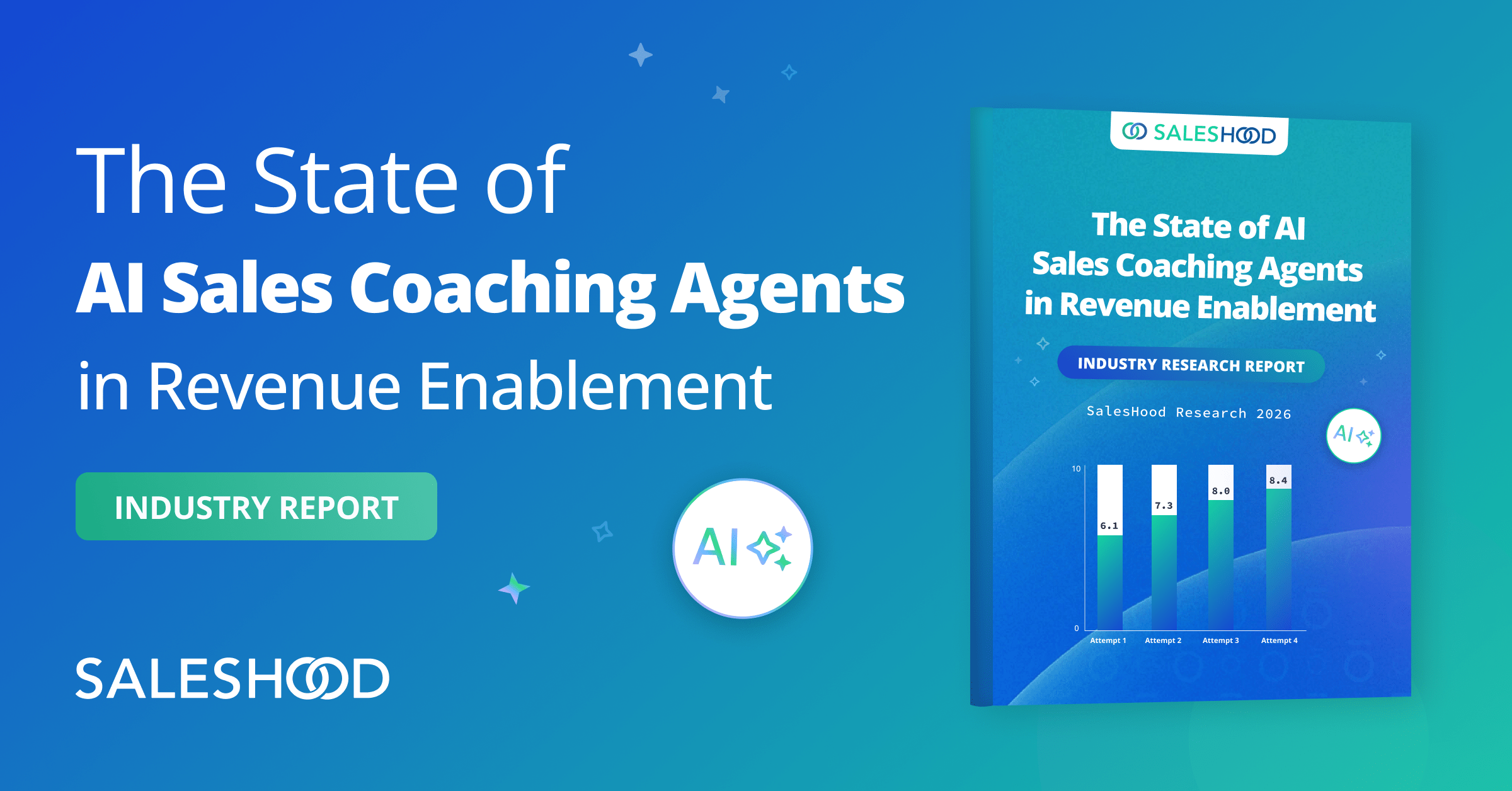
Sales coaching is broken. Not because companies don’t invest in it, but because it doesn’t scale. Managers are stretched thin. Training is episodic. And sales teams often get feedback too late (or not at all). Meanwhile, buyer expectations are rising and sales cycles are getting more complex. That’s why Agentic AI is fueling a new model and it’s already changing how top revenue teams operate and boost sales productivity Our latest research report, The State of AI Sales Coaching Agents in Revenue Enablement, reveals how AI Sales Coaching Agents are transforming enablement from a one-time event into a continuous, data-driven system. Here’s what we found. |
 |
Coaching Delivers Real Value In the Flow of Work
Traditional enablement relies on training sessions, certifications, and manager-led coaching. The problem? It doesn’t happen often enough.
AI coaching flips that model entirely. Instead of waiting for feedback, sellers can now:
- Practice real scenarios anytime
- Get instant, structured coaching
- Continuously refine their skills in the moment
This “always-on coaching” model is embedded directly into daily workflows, whether it’s onboarding, deal prep, or product launches.
Organizations adopting AI coaching agents are seeing measurable impact across the board:
- Programs launch 3x faster
- Rep participation increases 45%
- Managers save 24 hours per month
- Seller skills improve up to 38%
- Reps become 40% faster to readiness
And perhaps most importantly, pipeline conversion rates can increase up to 5x.
This isn’t just better enablement. It’s a fundamentally different operating model.
Click here to learn more about AI Role-Play.

Practice Is the New Performance Lever
|
One of the clearest insights from the data: High-performing teams don’t treat coaching as an event. They treat it as a habit. According to the research:
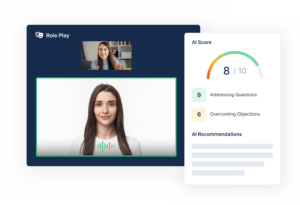
And the payoff is real. Sellers improved their skills by 38% after just four practice attempts as shown in the progression chart on page 10 of the report. |
 |

Repetition + feedback = mastery.
This is what AI coaching unlocks at scale, consistent practice paired with instant feedback, embedded directly into the seller’s daily workflow. It’s not just learning faster, it’s building confidence before it matters most.
Where Teams Start and Where They’re Going
Most organizations begin with familiar use cases:
- Pitch practice (39%)
- Sales execution scenarios (20%)
- Demo delivery (16%)
But the real evolution happens when teams expand deeper into the funnel. Advanced coaching scenarios now include:
- Executive storytelling
- Negotiation and objection handling
- Value articulation and ROI conversations
- Closing and urgency creation
In other words, AI coaching isn’t just helping sales teams say things better, it’s helping them sell better.
What AI Coaching Reveals About Skill Gaps
One of the most powerful aspects of AI coaching is the data. Analysis of 3.5 million words of AI feedback uncovered consistent gaps across teams:
- 94% of feedback focused on clarity
- 87% on value articulation
- 70% on driving next steps
The takeaway? Most sellers don’t struggle with product knowledge. They struggle with:
- Explaining value clearly
- Connecting to business outcomes
- Guiding the conversation forward
AI coaching directly targets these gaps in real time.
A New Role for Managers (Finally)
AI coaching doesn’t replace managers. It frees them to do more strategic coaching, team development and deal planning. Instead of reviewing every practice session, managers:
- Focus on high-impact coaching moments
- Support live deals
- Develop top performers strategically
That’s why teams are saving 24 hours per month per manager. This is how you scale coaching without scaling headcount.
Revenue Enablement Becomes Data-Driven
For the first time, revenue leaders can actually measure:
- Practice frequency
- Skill development
- Coaching effectiveness at scale
This visibility turns enablement into a performance engine, not just a support function. As the report highlights, the shift is clear:
Coaching is moving from episodic to continuous.
Enablement is moving from intuition to data.
AI Sales Coaching Agents aren’t a feature. They’re a new foundation. Organizations embedding AI coaching into daily workflows are already seeing:
- Faster ramp
- Better messaging consistency
- Higher confidence in customer conversations
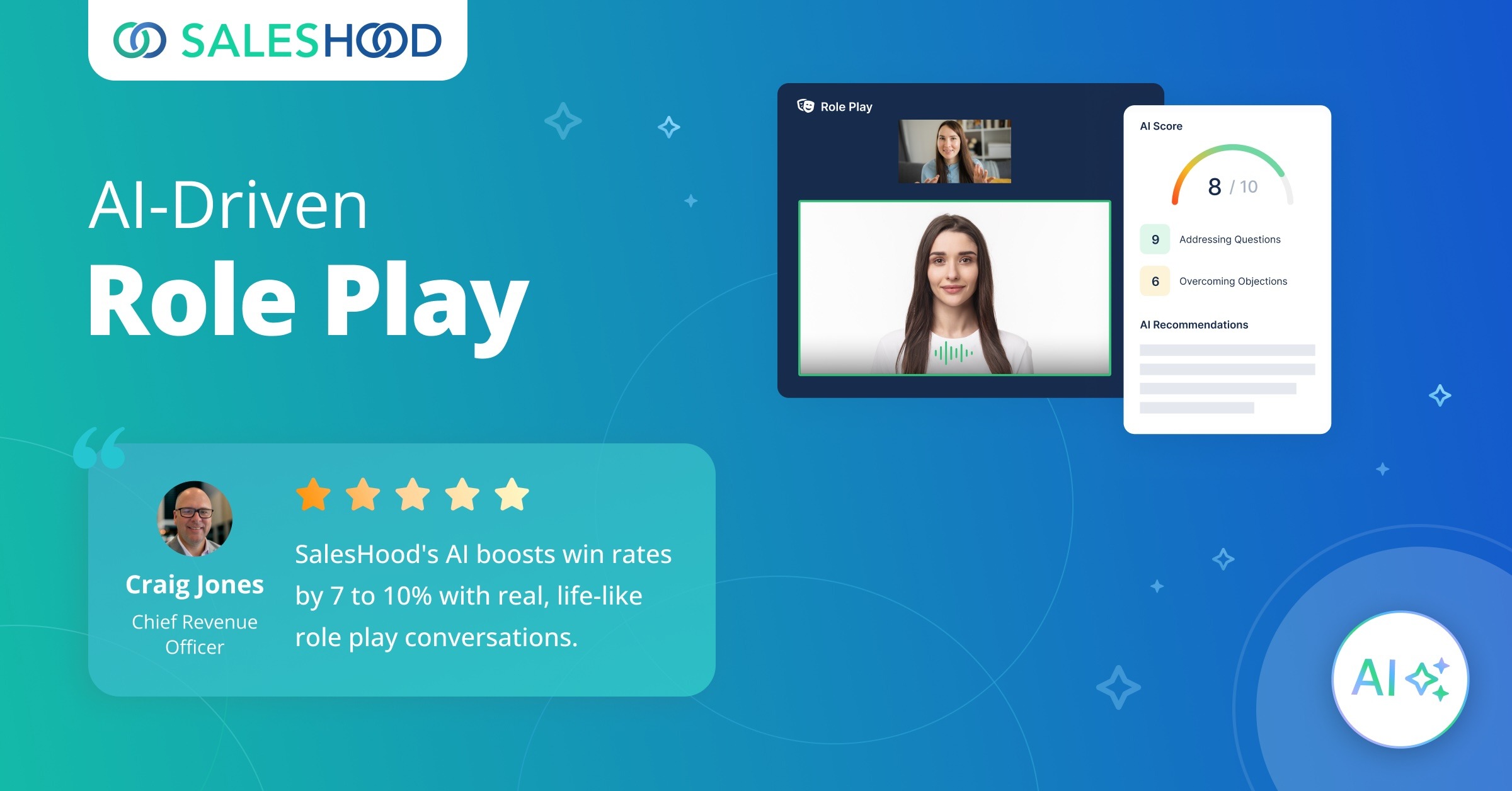
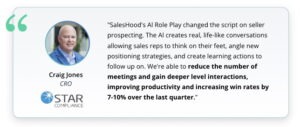
And this is just the beginning. Learn more about how Craig Jones, CRO StarCompliance, is boosting win-rates with AI Coaching Agents. Read case study.
Download the Full Report
This blog only scratches the surface.
If you want the full dataset, benchmarks, and program design frameworks—including:
- 34,000+ coaching submissions analyzed
- Benchmarks from 45 organizations
- Proven frameworks for building AI coaching programs
Frequently Asked Questions (FAQs)
What is AI sales coaching?
AI sales coaching uses artificial intelligence to simulate real sales conversations, provide instant feedback, and help sellers practice key skills like discovery, objection handling, and closing. Unlike traditional coaching, it’s always available and embedded directly into daily workflows, enabling continuous skill development at scale.
How does AI sales coaching improve seller performance?
AI sales coaching improves performance through repetition and real-time feedback. Sellers can practice conversations multiple times, refine their messaging, and apply coaching immediately. Research shows that repeated practice can improve seller skills by up to 38% and accelerate time to readiness by 40%.
What are the most common use cases for AI sales coaching?
The most common starting point is pitch practice, but teams quickly expand into more advanced scenarios such as discovery, demo delivery, objection handling, negotiation, and closing. Over time, AI coaching is used across the entire buyer journey to prepare sellers for real-world conversations.
How is AI sales coaching different from traditional sales training?
Traditional sales training is typically event-based using in-person workshops, manual certifications, and manager-led sessions. AI sales coaching is continuous and on-demand. It allows sellers to practice anytime, receive instant feedback, and improve in real time, while also giving leaders visibility into participation, skill development, and coaching effectiveness across the team.