|
|
One CRO I spoke with recently told me something that stuck. He pulled up his pipeline report one day, and everything looked healthy on paper: 4x coverage, deals spread across every stage, and close dates neatly populated for the quarter. After a couple of days, two of his largest deals slipped. And this was not the first time this happened.
That pattern is more common than most revenue leaders want to admit. The issue was never the number of deals in the funnel. The issue was that nobody on his team was having the right conversation at the right moment.
Sales funnel optimization is where that problem gets solved. And the uncomfortable truth is that it has nothing to do with adding more leads or renegotiating CRM stage criteria. It is a sales execution problem, and fixing it means looking hard at what your salespeople are saying and doing at every stage.
Why Do Most Sales Funnels Leak?
Many often attribute funnel leaks to data or stage-definition problems. In reality, they are a skill and readiness problem. According to a 2025 Gartner survey, 61% of B2B buyers now prefer a buying experience with no salesperson involvement at all, which means that when a salesperson does get in front of a buyer, that conversation has to count.
Revenue leaders spend weeks cleaning up CRM hygiene or arguing about qualification criteria when the actual issue is that their salespeople cannot have the right conversation when the deal reaches a critical moment. Here are the three failure points I see most consistently.
Weak Discovery and Qualification at the Top of the Funnel
Deals that should never enter the funnel do, because salespeople pitch before they understand the buyer’s situation. The opening conversation becomes a product tour instead of a diagnostic. The result is a pipeline full of early-stage opportunities that will never close, leaving a team too busy chasing them to focus on deals that could.
Inability to Articulate Value in the Middle of the Funnel
The mid-funnel stall is the most expensive problem that most B2B sales teams ignore. A demo lands well, the champion is engaged, and then nothing moves for three weeks. What happened? The demo was a feature walkthrough, not a business case. The champion cannot carry the message internally because the salesperson never gave them the language to do it. The problem almost never lives in the product or the pricing. It lives in the conversation.
That is where the data becomes hard to ignore. In our State of AI Sales Coaching in Revenue Enablement 2026, which analyzed 3.5 million words of AI coaching feedback, 94% of coaching feedback pointed to clarity gaps and 87% to value articulation gaps. That means the overwhelming majority of sellers struggle to translate what they know about their product into language that connects with what their buyer actually cares about. That is a skill problem, and it shows up most visibly in the middle of the funnel, where the stakes of every conversation are highest.
Poor Negotiation and Urgency Creation at the Late Stage
Late-stage deals stall for a different reason. The champion is bought in, and the evaluation is done. But the close date keeps slipping because the salesperson cannot create urgency without discounting, and they discount before they defend value.
Mutual close plans are vague, and the next steps are “following up”. Decision-makers who were never properly engaged suddenly raise concerns that feel new but have been sitting there for weeks.
What Does a Well-Optimized Sales Funnel Look Like?
A team with a healthy funnel looks different from the outside:
- Messaging is consistent regardless of which salesperson is running a deal.
- Salespeople shift their conversation style naturally as deals progress, moving from storytelling and exec presence at the top to active listening in discovery, value positioning during evaluation, and structured negotiation at close.
- Managers coach to specific stages rather than reviewing recordings in bulk.
The buyer journey framework from SalesHood’s research maps out what ‘good’ looks like at each stage. Here is a simplified version of how this translates to execution:
|
Funnel Stage |
What Sellers Need to Do Well |
What ‘Good’ Looks Like |
|
Awareness / Top of Funnel |
Elevator pitch, company narrative, and executive presence |
The salesperson commands attention in the first five minutes and earns a second meeting. |
|
Exploration / Mid-Funnel |
Discovery, active listening, empathy, and qualification against real business outcomes |
The buyer says, “You clearly understand what we’re dealing with,” before the demo is even scheduled. |
|
Evaluation |
Demo delivery, value positioning, and competitive handling |
The champion can replicate the business case internally without the salesperson in the room. |
|
Decision |
Objection handling, negotiation, and urgency creation |
The deal closes on or before the mutually agreed date with minimal last-minute surprises. |
|
Expansion |
ROI storytelling, executive alignment, and adoption narratives |
Renewals and expansions happen on time because the value delivered was clearly documented from the start. |
How Do You Optimize Each Stage of the Sales Funnel?
Knowing where the funnel leaks is the diagnosis. But diagnosis alone does not close deals. The fixes are specific to each stage, and they are about behavior, not process. Here is what that looks like.
Improving Top-of-Funnel Conversion
Top-of-funnel conversion fails when qualification is inconsistent and pitch delivery is underpracticed. The fix is not a new ICP (ideal customer profile) definition or a refreshed slide deck. The fix is ensuring that every salesperson on your team can deliver the same crisp, buyer-relevant narrative and run a genuine discovery conversation before moving to the next step.
Teams that build structured pitch practice into their onboarding and ongoing cadence consistently move past the first meeting at higher rates, because the first conversation earns the second.
Well-designed sales playbooks help here. When a salesperson knows exactly what question to ask at each stage, what content to use, and what qualifies a deal as real, they stop chasing phantom pipeline and start spending time where it counts.
Moving Deals Through the Middle of the Funnel
The mid-funnel stall deserves more attention than it typically gets. According to our State of AI Sales Coaching in Revenue Enablement 2026, which analyzed 34,922 coaching submissions, 94% of AI coaching feedback focused on clarity in messaging and 87% on value articulation. Those two gaps explain the vast majority of deals that stall after the demo.
The immediate priority is strong discovery habits. Salespeople need to understand the buyer’s business problem, not just their interest in the product. They need to connect every capability they demonstrate to a measurable outcome that the buyer has already told them they care about. And they need to equip their champion with the language to sell internally, which means building a business case together, not handing over a slide deck and hoping for the best.Improving Late-Stage Win Rates
Late-stage deal loss is almost always a combination of poor urgency creation, weak negotiation preparation, and misaligned stakeholders. The antidote to each of those is specific:
- Salespeople need to practice negotiation conversations before they happen in real deals, not after.
- Champions need clear Mutual Action Plans (MAPs) that keep buying committee members aligned on milestones and timelines.
- Decision-makers who have been passive in the evaluation need to be brought in deliberately before the close date arrives.
The practice piece is where most teams underinvest. Negotiation is a skill, and skills do not develop in the moment. They develop through repetition before the moment arrives.
|
|
 Craig Jones, Chief Revenue Officer at StarCompliance, saw this directly after
 Keeping stakeholders aligned through the late stage is the other half of the problem. Even when the champion is bought in, deals stall because other members of the buying committee have drifted, lost context, or quietly raised concerns the salesperson never heard.
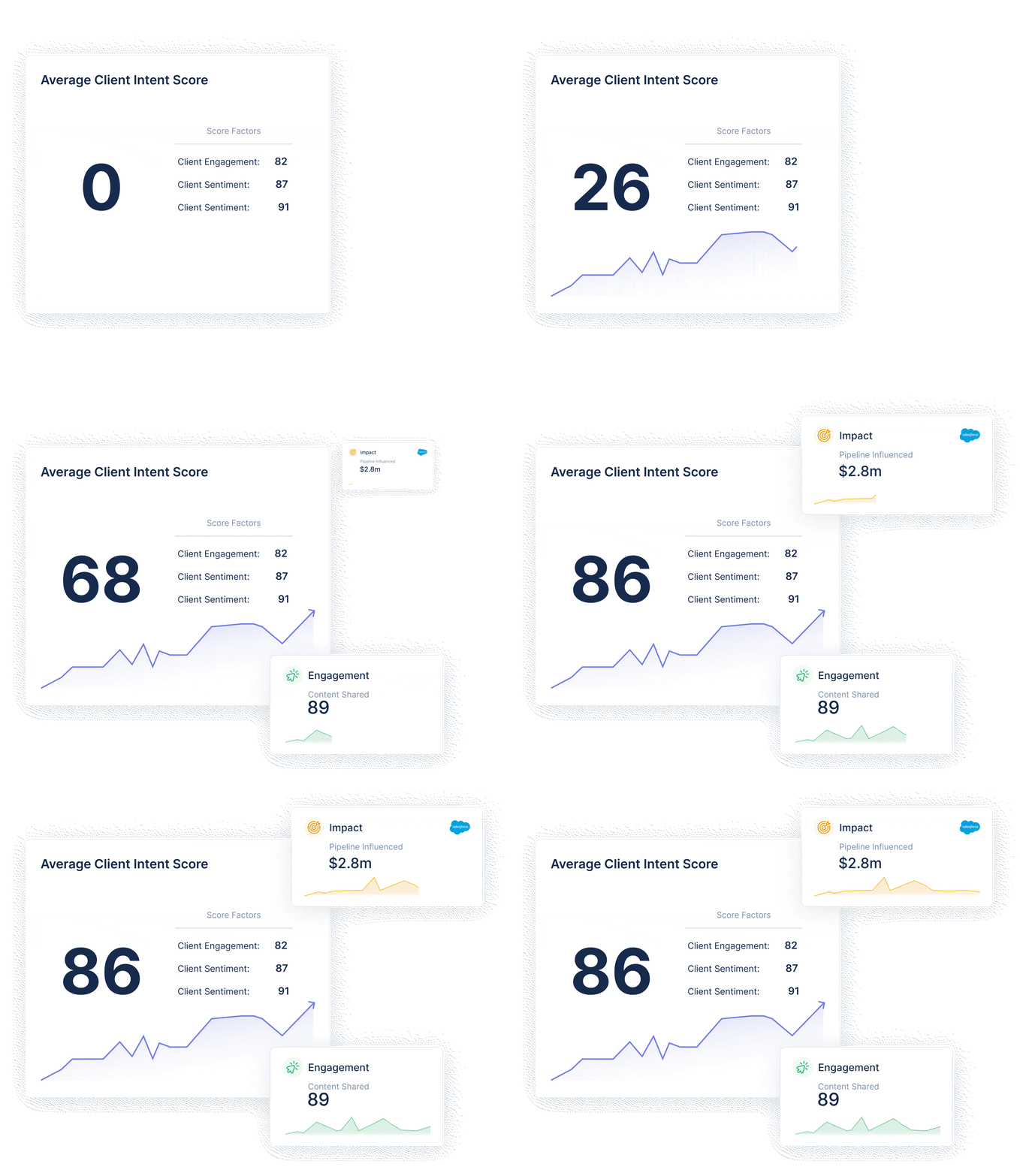
Digital Sales Rooms, which give salespeople a shared space to deliver curated content, build Mutual Action Plans, and track buyer engagement in real time, solve that problem directly. When a salesperson can see exactly who on the buying committee is engaging with what content and which stakeholders have gone quiet, they know where to apply the right follow-up at the right moment. And that means fewer surprises on the close date.

What Role Does Sales Coaching Play in Funnel Optimization?
Here is the argument I want to make clearly: you cannot optimize your funnel by fixing your CRM stage criteria. You optimize it by improving what your salespeople say and do at each stage. Consistent, skill-based coaching is the mechanism that makes that improvement happen. Most teams are simply not running enough of it.
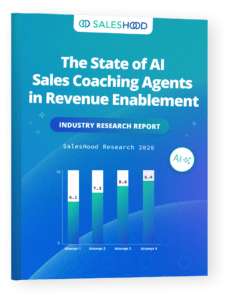
The benchmark data is telling. According to our State of AI Sales Coaching in Revenue Enablement 2026 report, top-performing teams average seven practice sessions per salesperson, practice every three days, and reach 85% adoption. Those teams see skill improvement of approximately 38% after just four practice sessions. The teams that do not reach that cadence, see no meaningful skill progression, and their funnel metrics reflect it.
The practical challenge has always been scale. A manager with 12 direct reports cannot meaningfully coach every discovery call, every demo, and every negotiation conversation. SalesHood’s AI Coaching Agents change that math. They deliver instant structured feedback on every practice submission, give every salesperson access to consistent, stage-specific coaching without adding to the manager’s calendar. Managers save approximately 24 hours per month and redirect that time to the deal reviews and strategic conversations that genuinely require their judgment.

What this makes possible is a continuous coaching loop: salespeople practice before critical conversations, receive immediate feedback, apply that feedback in the next attempt, and build skill progressively. That loop, applied across the entire team over weeks, is what produces a healthier funnel.
How Do You Measure Sales Funnel Performance?
Funnel optimization metrics that actually tell you whether your funnel is improving are not complicated, but they require consistency to be useful. Here are the four that matter most:
- Stage-to-stage conversion rate: What percentage of opportunities move from each stage to the next? A drop at a specific stage tells you exactly where to focus skill development.
- Average deal velocity by stage: How long do deals sit at each stage on average? Persistent delays in a single stage, even when deals eventually progress, signal a coaching and readiness gap.
- Win rate by deal stage at time of loss: Where in the cycle are you losing the most deals? Losing at the late stage repeatedly points to negotiation and urgency problems. Losing at evaluation points to demo and value articulation gaps.
- Pipeline coverage ratio: How much pipeline does the team carry relative to quota? Below 3x is a warning signal. Above 4x with low conversion is a skill and qualification signal, not a demand problem.
Tracking these metrics consistently across quarters gives you the visibility to coach to the right stage at the right time, which is where the actual improvement happens.
The Funnel Problem Is a Readiness Problem
We have spent years watching companies try to fix their pipeline by adding more deals to the top of it. The math rarely works, because a leaky funnel with more volume is still a leaky funnel. The sales teams that will pull away from the competition in the next 18 months are not the ones with the most pipeline. They are the ones where every salesperson can execute the right conversation at every stage without waiting for their manager to step in and rescue the deal.
That kind of readiness does not happen from a quarterly training session. It comes from consistent practice, stage-specific feedback, and managers who coach to the moments that matter.
SalesHood’s Agentic AI Sales Enablement Platform is built exactly for that purpose, unifying content, coaching, and buyer engagement in one system so teams can turn strategy into consistent field execution. Your pipeline looking healthier than your conversion rates suggests that the problem is execution, not volume.
If your deals are stalling and your close rates are not where they need to be, we would like to show you how SalesHood helps teams fix that. Book a demo, and we will walk you through what consistent funnel execution looks like at scale.

Frequently Asked Questions (FAQs)
What is sales funnel optimization?
Sales funnel optimization is the process of identifying where qualified opportunities stall, slow down, or drop out across each stage of the sales cycle, and then improving the skills, content, and conversations that move them forward. It is distinct from demand generation, which focuses on increasing lead volume. Funnel optimization focuses entirely on converting what is already in the pipeline.
What are the most common reasons deals stall in the sales funnel?
The root cause is almost always a skill gap, not a process or data problem. At the top of the funnel, salespeople pitch before they qualify. In the middle, they cannot articulate value or equip their champion to sell internally. At the late stage, they discount instead of defending value and never build a business case compelling enough to drive a decision.
How does sales coaching improve funnel conversion rates?
Coaching builds the specific skills each stage demands: qualification at the top, value articulation in the middle, and negotiation at close. Teams that average seven or more practice sessions per salesperson and maintain 85% adoption see approximately 38% skill improvement after just four attempts, which translates directly into higher conversion rates and faster deal velocity.
What metrics should I track to optimize my sales funnel?
The four metrics that matter most are stage-to-stage conversion rate, average deal velocity by stage, win rate by deal stage at time of loss, and pipeline coverage ratio. Tracked consistently across quarters, they tell you whether you have a demand problem, an execution problem, or both, and where to focus coaching investment.