Key Takeaways
- AI sales role play is practice software that lets salespeople rehearse real buyer conversations with an AI buyer and get scored feedback right after every attempt.
- Traditional role play doesn’t scale because it needs a manager in every session, so practice is rare and feedback varies from one manager to the next.
- The AI grades each attempt against a scorecard the team writes, and managers review the attempts and add their own coaching.
- The fastest wins are onboarding, kickoff follow-through, objection handling, demo practice, and certifying reps on new messaging.
- Run it as a program: start with the conversations that decide deals, pilot with one team, keep a practice rhythm, and tie scores to ramp time and win rate.
Last updated: October 15, 2026
AI sales role play gives every rep a buyer to practice on and a score after every attempt, without waiting for a manager’s calendar to open up. This guide explains how it works, where it pays off first, how to run a program, and what to check before you buy AI role play software.
What is AI sales role play?
| AI sales role play is practice software that lets salespeople rehearse real buyer conversations with an AI buyer and get scored feedback right after every attempt. Reps practice discovery calls, pitches, and objection handling on their own schedule, and managers review the scores and add their own coaching without sitting in on every session. |
A role play starts with a scenario: the buyer’s persona and demeanor, and the questions and objections they will raise. The rep talks it through out loud, and when the rep submits, the AI grades the attempt against the team’s scorecard.
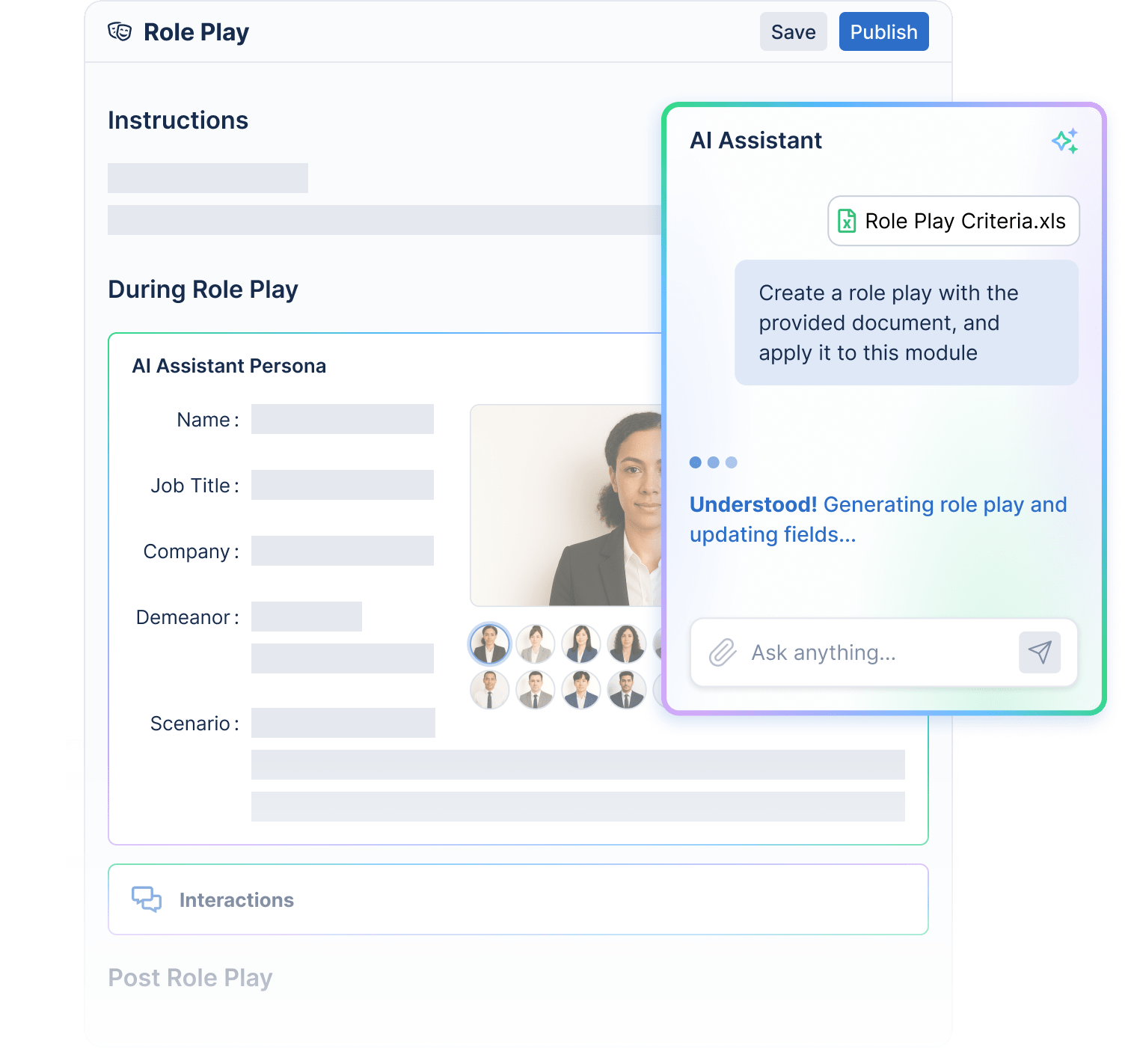
It isn’t recorded pitch practice, where nobody pushes back, or conversation intelligence, which analyzes calls that already happened. AI role play comes before the call, while there is still time to fix the pitch. In SalesHood AI Role Play, the AI Assistant can draft a role play from your own content, so enablement doesn’t start from a blank page.
Why doesn’t traditional sales role play scale?
Traditional role play depends on a manager being in the room. That works for a team of four and breaks for a team of forty. Practice gets rare, it happens long before the call that needs it, and the feedback depends on which manager happened to run the session, so reps hear different standards for the same skill.
A familiar story: a sales leader runs two hours of live role play on new positioning at the kickoff. Two weeks later he joins a discovery call and hears a rep open with the old message, almost word for word. The reps weren’t careless. They practiced the new story once, then went back to selling.
Managers run out of hours
A manager with ten reps can’t rehearse every important call with each of them. Most coach two or three people closely, and the reps who need practice most often get the least.
Practice happens at the wrong time
Kickoffs and workshops put practice on the training calendar, not the deal calendar. Skill that holds up in a negotiation comes from repetition in the days before it.
Feedback changes from manager to manager
Two managers scoring the same pitch will name different gaps. Across a team, each manager’s reps end up learning a slightly different version of the story.
Why does AI sales role play matter more now?
Buyers now do more of the decision without a seller, so the few conversations they do take carry more weight. A rep who fumbles discovery or can’t explain value may not get a second meeting. AI sales role play gives reps a way to rehearse those moments before they happen, at the volume a large team needs.
In a March 2026 Gartner survey of 646 B2B buyers, 67% said they prefer a rep-free buying experience. Buying groups have also grown, which means more objections and more chances for the message to drift. For the wider view of AI in content, training, and buyer engagement, see our guide to AI sales enablement.
AI sales role play vs traditional role play
The difference comes down to who has to be present. Traditional role play needs a manager for every session, so it happens rarely and the feedback varies. AI sales role play needs only the rep, so practice can happen whenever a call is coming up, and every attempt is scored against the same criteria.
| Traditional role play | AI sales role play |
|---|---|
| Feedback comes days later, if it comes at all. | The AI scores the attempt as soon as the rep submits, so the rep can try again right away. |
| Practice waits for a manager’s calendar. | Reps practice on their own time, before the calls that matter. |
| Each manager coaches to a different standard. | Every attempt is graded against the same scorecard the team wrote. |
| Gaps show up in deal reviews, after the call. | Managers review scores and attempts and coach before the call. |
| Practice happens at events like kickoff. | Practice runs alongside the selling calendar all year. |
How does AI role play improve coaching and sales readiness?
AI role play fixes the volume problem in coaching. Every rep gets the same consistent feedback on every attempt, and managers get a scored record of who practiced and how they did. That frees managers to spend their time on the reps and skills that aren’t improving instead of sitting through every rehearsal.
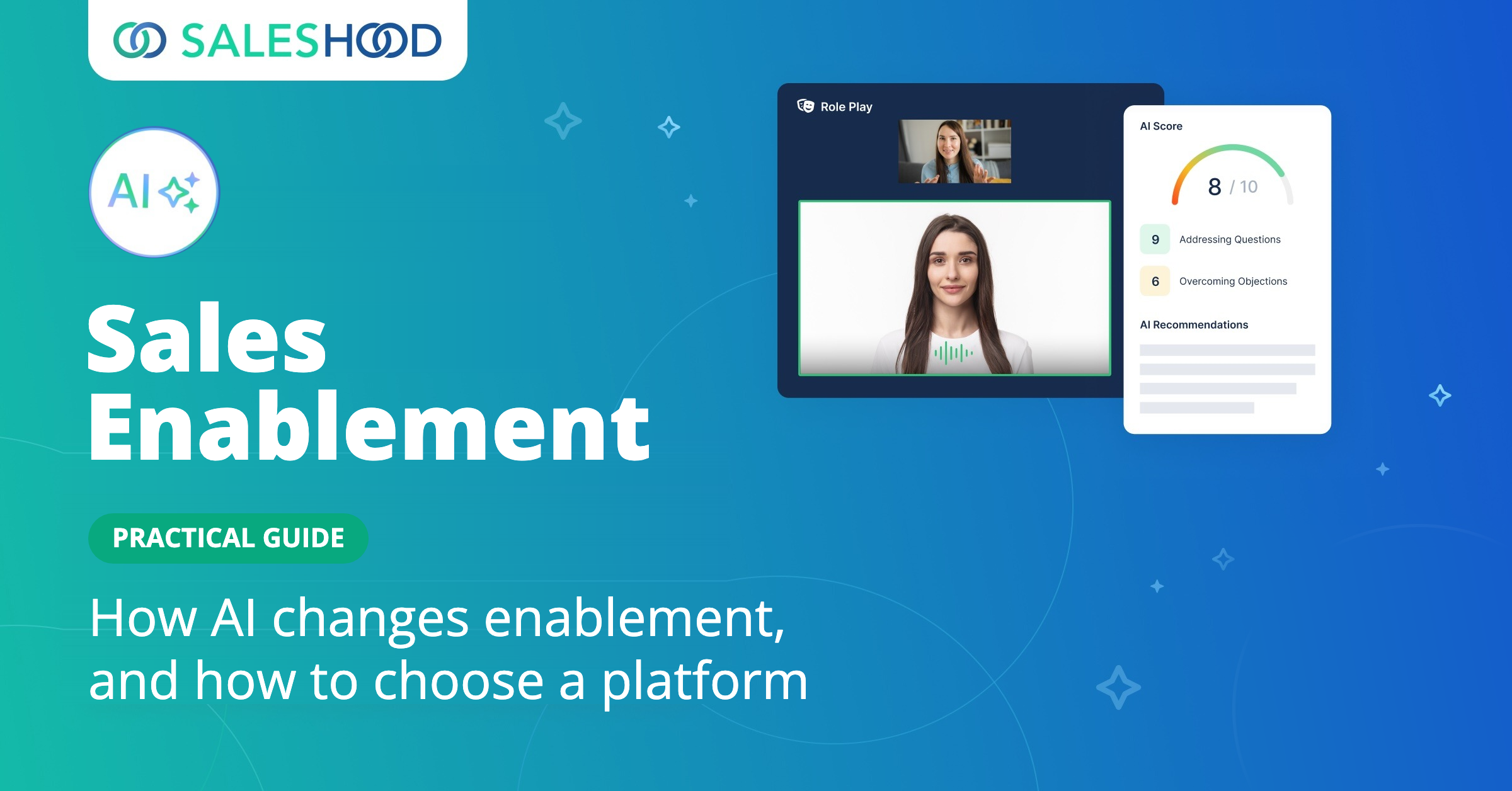
In SalesHood, the team writes up to 10 criteria for each role play, such as delivering a key message or handling a pricing objection. After the rep submits, the AI returns an overall percentage score, plus a grade and written reasoning for each criterion. The default pass mark is 80%, so a role play can double as a certification. Managers can open any attempt and add their own coaching.
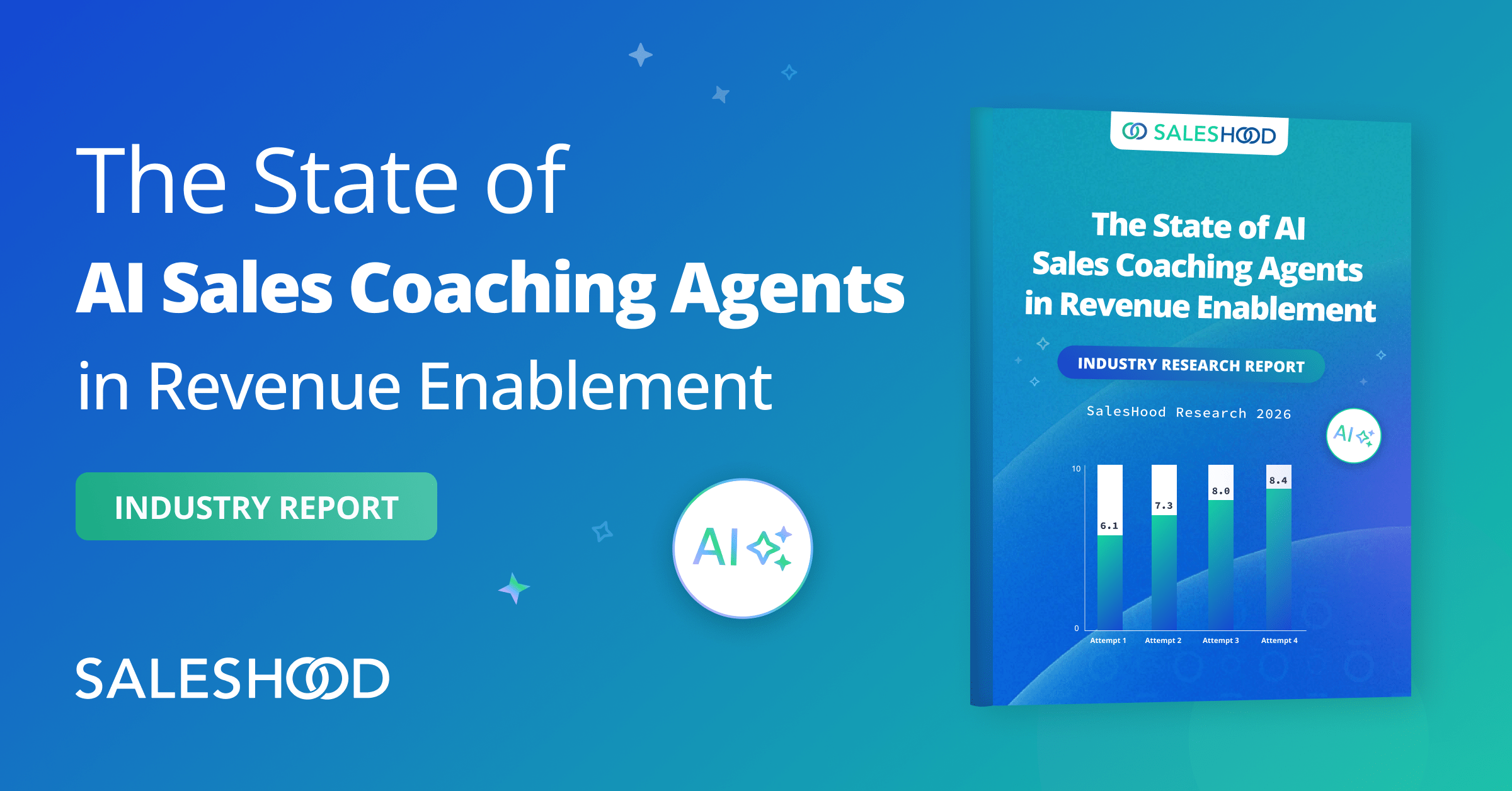
SalesHood’s State of AI Sales Coaching in Revenue Enablement 2026 report looked at 34,922 coaching submissions from about 10,000 sellers at 45 organizations. Among its findings:
- Reps averaged seven practice sessions and came back to practice every three days.
- Average scores rose from 6.1 to 8.4 out of 10 across four attempts, about 38%.
- Organizations using AI coaching reported reps ready 40% faster and managers saving about 24 hours a month.
These are findings across the report’s dataset, not one customer’s results.
Tufin runs enablement with one person and uses AI role play to get new product messaging to its sales team.
“We’re able to take what comes from our product… get that into a role play, get that out in front of our sales team in a week, maybe two weeks, and that used to take us a month or more.”
 Patrick PyettGlobal Head of Sales Enablement, Tufin
For scenario design in more depth, download The Definitive Guide to AI Role Play in Sales.
Five use cases for AI sales role play
AI sales role play pays off fastest where an unprepared conversation costs the most: a new hire’s first calls, the weeks after a kickoff, a tough objection, a demo, and any change in messaging. Start with one of these five, prove it works, and add the next.
Onboarding new hires
New reps practice the first discovery call and the core pitch many times before meeting a real buyer. The scores show managers who is ready and who needs another pass.
Reinforcing the sales kickoff
AI role play keeps reps practicing the kickoff story for weeks afterward, so it is still there when the quarter’s big meetings arrive.
Objection handling
Give the AI buyer the objections your reps hear most, like price, timing, or a competitor. Reps answer the pushback and get scored while nothing is at stake.
Demo and value practice
Reps often know the product but struggle to say why it matters to this buyer. In SalesHood’s report, 94% of AI feedback entries pointed to clarity and 87% to value articulation, which is the gap a demo role play targets.
Messaging certification
When pricing or positioning changes, a role play with a pass mark checks that every rep can explain the new message before a customer hears it. Veritiv uses AI role plays to coach and certify its 1,200 sellers.
“We’re rolling out new go-to-market programs that would have taken a year that we can now do in six weeks.”
 Chris BradleyChief Marketing Officer and Head of AI Transformation, Veritiv
How to run an AI sales role play program
A good program starts small and is measured from day one. Choose the conversations that decide deals, build role plays that sound like your buyers, pilot with one team, set a practice rhythm, and tie the scores to outcomes your executives already track. These five steps cover it.
Step 1: Pick the conversations that decide deals
Start with three to five, such as the first discovery call, the executive pitch, the most common objection, and the late-stage negotiation.
Step 2: Build role plays from your own material
Base the scenario, persona, and objections on your messaging, your ideal customer profile, and real competitive deals. In SalesHood, the AI Assistant drafts the role play from your goals and content, and you edit from there. Write the scorecard so the AI grades what your managers would.
Step 3: Pilot with one team
Run it with one team or onboarding class, fix the scenarios that feel off, and let those reps tell the next group what it was like.
Step 4: Set a practice rhythm and keep it
Tie practice to real events, like a launch, a kickoff, or a big quarter. The teams in SalesHood’s report came back every three days. A role play run once won’t change how anyone sells.
Step 5: Measure it against business results
Track participation and scores first, then connect them to ramp time, win rate, and deal size. If you can’t draw a line from practice to at least one of those, the program needs a change.
What to look for in AI sales role play software
Most AI sales role play software sounds alike in a demo. The differences show up when reps use it every week. Check five things: scenarios from your own selling situations, specific feedback, what managers can do, fit with where your team works, and a design for ongoing practice.
Role plays built from your scenarios
A fixed script with set answers is a quiz. You should be able to set the scenario, the buyer’s persona and demeanor, and the objections they raise.
Specific feedback on every attempt
One overall grade doesn’t tell a rep what to change. Look for scoring against criteria your team writes, with a reason for every grade.
Manager review and coaching
The AI should handle the volume, not replace the manager. Managers need to see scores, open any attempt, and add their own coaching.
A fit with where your team already works
A tool that sits apart from onboarding, content, and certification gets ignored. Practice should connect to the programs reps already use.
Built for ongoing practice
Onboarding is the obvious first use, but messaging keeps changing after it. Choose software your team will keep using for launches and certification all year.
On G2, SalesHood is a Fall 2026 High Performer in AI Sales Roleplay Tools and a Leader in Sales Coaching, with a 4.6-star rating from 828 verified reviews.
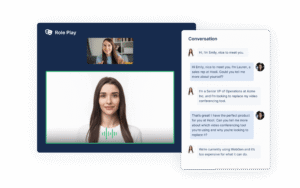
Looking for AI role play software?
See how SalesHood AI Role Play works, from building a role play to scoring and certification.
Where AI role play fits in your enablement program
AI role play works best as one part of a readiness program, not as a separate tool. Reps learn the message, practice it, get scored, and take it into the deal. When those steps live in one place, enablement can see whether training turned into a conversation reps can deliver.
In SalesHood, the AI-Powered Revenue Enablement Platform, AI Coaching & Role Play sits next to Content Management, Training & Onboarding, Guided Selling, and Digital Sales Rooms, so the pitch a rep practices is the one in their onboarding and their content. Customers using the platform report results like StarCompliance’s: a 2X average selling price increase, a 17% increase in new logo win-rates, and a 35% reduction in sales cycle.
The simplest way to start: take your newest pitch, turn it into a role play this week, and ask every rep to run it before their next call.
Frequently Asked Questions (FAQs)
What is AI sales role play?
AI sales role play is practice software that lets salespeople rehearse real buyer conversations with an AI buyer and get scored feedback right after every attempt. Reps practice discovery calls, pitches, and objection handling on their own schedule, and managers review the scores and add their own coaching.
How does AI score a sales role play?
The team writes a scorecard for each role play: the criteria that matter, such as a key message or how an objection is handled, each with a rubric. When the rep submits, the AI grades every criterion with written reasoning and gives an overall score. A pass mark turns the role play into a certification, and managers can review the attempt and add their own coaching.
What should you look for in AI sales role play software?
Five things: role plays built from your own scenarios and messaging, specific feedback on every attempt, manager review and coaching, a fit with the programs and content your team already uses, and a design for ongoing practice rather than onboarding only. See how SalesHood AI Role Play works.
What is the difference between AI role play and conversation intelligence?
Conversation intelligence analyzes calls that already happened with real buyers. AI role play happens before the call, so reps arrive prepared instead of learning from the recording afterward. Many teams use both: one shows where reps struggle, the other gives them a place to practice.
How do you measure whether an AI role play program is working?
Start with participation, practice frequency, and scores. Then compare them with the results your executives track: ramp time, win rate, and deal size. If practice doesn’t connect to at least one of those within a quarter, change the program or how you measure it.
Is AI role play better than live role play with a manager?
They do different jobs. AI handles volume and consistency: every rep can practice without booking a manager and gets graded against the same criteria. Managers bring judgment and context about the deal. The strongest programs let AI run the practice and send manager time to the reps who need it.
How quickly can a team launch an AI sales role play program?
Fast, if you start narrow. Teams that begin with three to five conversations that decide deals, pilot with one team, and add scenarios over time get going sooner than teams that try to cover everything at launch.