Key Takeaways
- Sales mentorship goes beyond skills training to build confidence, mindset, and leadership capabilities across teams
- One-to-one guidance accelerates learning and creates personal connections that formal programs often miss
- Effective mentoring improves retention, morale, and creates a culture where knowledge sharing becomes natural
- Modern mentorship programs combine behavioral insights with scalable frameworks to reach entire sales organizations
Walk into any top-performing sales floor and you’ll notice something beyond the energy and closed deals. There’s always at least one experienced rep with a small crowd around their desk, sharing stories and advice. That’s your sales mentor in action, creating the invisible foundation that separates great teams from average ones.
High-performers don’t just learn, they model. Formalize this organic magic through structured programs that scale the best reps’ wisdom across your entire organization. Mentorship forges human connections that turn knowledge into wins. Mentors supercharge individual performance, reshape team dynamics, and deliver hard results in today’s sales world
This article explores how mentors shape individual performance, transform team dynamics, and drive measurable results in modern sales organizations.
What Makes a Good Sales Mentor
Top sales mentors crush quotas and teach like pros. They model winning behaviors daily. They command respect through results yet stay approachable, remembering the grind of early deals. Key traits hit hard: empathy builds trust, active listening uncovers blockers, storytelling makes lessons stick.
They deliver tough feedback with encouragement, celebrate breakthroughs, and live resilience under fire, curiosity in objections, ownership in losses. Experience helps. Willingness to invest time seals it. Mentors who review calls unprompted or share war stories freely dominate.
Beyond Skills Training: The Personal Connection
Traditional sales training teaches you what to say. A sales mentor shows you how to think. That’s the fundamental difference between classroom learning and true mentorship relationships.
When a mentor sits down with a new rep, they’re not just reviewing product specs or objection handling scripts. They’re building confidence from the ground up. Research shows that 82% of sales reps identify coaching as critical to their success. This isn’t just about techniques, it’s about developing the mindset that makes those techniques work.
The one-on-one dynamic creates something special. In a safe space where mistakes become learning opportunities, reps can ask the “dumb” questions they’d never raise in a group setting. They can role-play that difficult conversation with a mentor who’s been there before. According to behavioral science, this personal guidance sticks better because it connects to real experiences and emotions, not abstract concepts.
Watch a strong mentor work with their mentee and you’ll see modeling in action. They don’t just explain how to handle rejection—they demonstrate resilience in real time. They show rather than tell, which explains why in a study, 94% of sales representatives reported that coaching improves their performance. The mentee absorbs not just the words, but the attitude, the approach, and the professional presence.
This personal foundation creates ripple effects that extend far beyond individual growth, shifting entire team dynamics.
From Individual Growth to Team Excellence
The transformation from individual confidence to team-wide excellence happens faster than most leaders expect. Organizations that leverage structured mentoring sales programs see their entire culture shift within months.
Structured programs deliver clear frameworks: mentors and mentees follow standardized formats like weekly check-ins and goal templates, compensation aligns via bonuses for extra effort, recognition flows through shoutouts, leaderboards, or fast-tracks.
Take Copado’s experience with structured enablement and mentorship. Within 90 days of implementing a platform with built-in coaching and training capabilities, they saw win rates climb, more reps getting involved in deals, and average selling prices increase. Their customer story proves that pairing human coaching with scalable technology accelerates results.
The data backs this up across the industry. Research from the Journal of the Academy of Marketing Science confirms that effective coaching drives up to 16.7% higher annual revenue growth and 28% increases in win rates.
Faster Learning and Skill Application
New reps with mentors hit the ground running. They’re more likely to hit targets when they receive coaching during training. Why? Because mentors translate theory into practice instantly. Instead of memorizing generic objection handling techniques, mentees learn exactly how those objections sound at your company, with your products, in your market. Knowledge retention soars when paired with real-world context. Gartner’s State of Sales Manager Coaching finds that quality coaching results in 8% improvement in sales performance.
Cultural Shifts and Knowledge Sharing
Something remarkable happens when mentorship becomes embedded in team culture. It has been observed that most sales reps prefer learning by asking their peers rather than through formal channels. Teams with strong mentor relationships naturally share more information. The “lone wolf” mentality disappears, replaced by collaborative sales content sharing and peer support. Deal strategies become team discussions. Win stories spread faster. Everyone benefits from collective wisdom.
Leadership Pipeline Development
Today’s mentees become tomorrow’s mentors and managers. A solid sales mentorship program creates a natural succession plan. Reps who’ve benefited from great mentoring understand its value and pay it forward. They develop leadership skills through teaching others, preparing them for management roles. This organic leadership development strengthens the entire organization’s bench strength for years to come.
While these benefits are compelling, implementing effective mentorship isn’t without obstacles.
When Mentorship Programs Face Reality
Even the best intentions hit roadblocks when building a sales mentorship program. Let’s address the real challenges teams face:
- Time constraints squeeze everyone. Your top performers are busy closing deals, not teaching. Solution: Start small with structured 30-minute weekly sessions and leverage AI coaching agent prompt examples to supplement human mentoring.
- Not everyone’s a natural teacher. Your best seller might struggle to explain their magic. Solution: Provide mentor training through resources like the MEDDICC coaching guide to develop teaching skills.
- Scaling feels impossible. Personal relationships don’t multiply easily across large teams. Solution: Blend one-on-one with group sessions and asynchronous platforms for recorded role-plays and feedback.
- ROI seems fuzzy. Unlike training completion rates, mentorship impact appears harder to measure. Solution: Track mentee performance metrics, retention rates, and time-to-productivity alongside qualitative feedback.
Despite these challenges, the mentorship approach continues to evolve with new tools and frameworks.

How AI Agents Scale Sales Mentorship
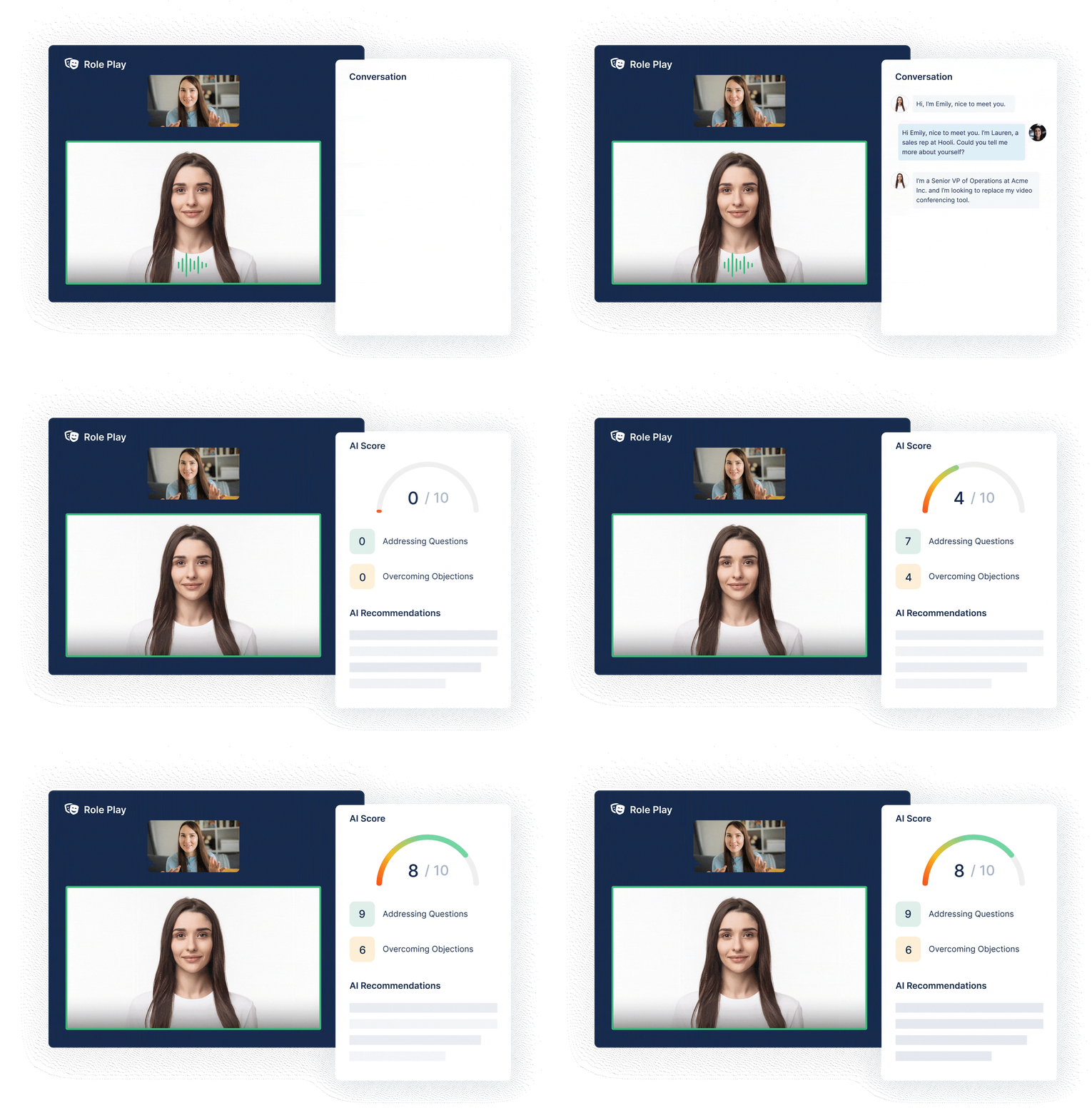
AI agents supercharge mentorship without losing human edge. They handle volume so elites focus on impact. AI delivers personalized coaching: analyzes calls for real-time feedback, simulates adaptive role-plays, generates drills on weaknesses.
Group sessions gain AI-moderated debriefs. Asynchronous libraries enable 24/7 objection practice against virtual mentors learning from team data. SalesHood integrates seamlessly, blending peer wisdom with AI precision. Ramp times slash. Win rates spike. Top reps multiply reach.
Moving Forward with Mentorship Programs
The future of mentoring sales teams blends human connection with smart technology. Modern sales enablement platforms now facilitate mentor relationships at scale while preserving the personal touch. Peer learning environments are becoming the norm, with structured programs that make mentorship systematic rather than accidental.
Ready to build a mentorship culture that drives real results? Explore how SalesHood’s sales coaching capabilities help teams create scalable mentor relationships. Book a demo to see how technology can amplify your human coaching efforts.
Frequently Asked Questions (FAQs)
How do you turn informal sales mentoring into a scalable program?
Most teams already have go-to reps and player coach managers people copy anyway. Start by naming them as mentors, giving them a simple cadence to follow, and making mentoring part of their role, not a side hobby.
Keep the structure light and repeatable: short weekly sessions, a basic format for goals and call reviews, and clear metrics like ramp time and win rates. Then capture their best calls and role plays, and use your enablement and AI tools to replay, simulate, and share those moments across the team so the relationship stays human, but the impact scales.
How do you find good mentors within your sales team?
Look for reps who naturally explain things to colleagues and celebrate others’ wins. The sales mentor mindset shows up in daily behavior. They share AI role-play tips without being asked, offer to review call recordings, and remember what it felt like to struggle. Experience matters less than willingness to teach. Some of your best mentors might be reps just 12-18 months ahead of their mentees, since they remember the learning curve clearly.
What results can you expect from a sales mentorship program?
Teams typically see faster ramp times for new hires, with productivity gains of 30-45% in the first quarter. Retention improves dramatically. Mentored reps stay 25% longer on average. You’ll notice cultural shifts too: more knowledge sharing, stronger pipeline quality, and improved forecast accuracy. Measurement should include both hard metrics (quota attainment, deal velocity) and soft indicators (engagement scores, peer feedback). Track progress monthly but expect meaningful changes within 90 days.
What if your team doesn’t have time for mentorship activities?
Time scarcity is real, but consider the cost of not mentoring. Teams spending 30 minutes weekly on mentorship save hours in ramp time and reduce costly turnover. Start by embedding mentorship into existing activities. Deal reviews become teaching moments, pipeline discussions include skill development. Use tools like guided tours and the AI coaching personal touch approach to maximize impact with minimal time investment. The long-term productivity gains far outweigh the initial time commitment.