Key Takeaways
|
You’re preparing for an important customer conversation. The stakes are high, and you want every question, insight, and next step to land with impact. Long before the call begins, an AI sales coach is already working beside you.
It analyzes past interactions, identifies gaps in your discovery flow, and recommends stronger messaging tailored to your buyer. You step into the meeting more confident and better equipped, not because of last-quarter’s training, but because coaching happened before you ever clicked “Join.”
When the call ends, your AI coach gets back to work. It breaks down what happened, highlights missed opportunities, and pinpoints moments where value positioning could be sharper. Within minutes, you receive personalized coaching notes that guide your follow-up strategy and prepare you for the next conversation. The real learning happens after the call, while insights are fresh and momentum is high.
That’s the promise of AI sales coaching. It moves coaching out of sporadic workshops and away from delayed manager reviews. Instead, it delivers consistent, actionable guidance before and after every customer interaction, where it makes the greatest impact.
In this blog, we explore how AI sales coaching is reshaping modern sales enablement. You’ll learn why proactive and post-call coaching outperforms traditional models, what features matter most in AI coaching technology, how managers can layer human expertise on top of AI-driven insights, and how SalesHood AI sales coaching tool is helping teams drive measurable, repeatable revenue outcomes.
Why AI Sales Coaching Is Transforming Modern Sales Training
Traditional sales training was built for another time. Reps sat through quarterly workshops, generic online modules, or occasional ride-alongs. The problem was that by the time feedback arrived, the deal was already over and the lesson had little impact.
AI sales coaching changes that rhythm completely. Instead of delayed reviews, reps get immediate insights they can act on right away. This shift is already happening, as seen in how AI transforms static reviews into real-time guidance that actually sticks.
The impact of this shift is clear.
- Faster ramping and onboarding: AI pinpoints skill gaps the moment they show up and suggests the right learning modules to close them. That is exactly how SalesHood’s customers use their AI-powered sales coaching to make onboarding smoother. The teams are able to see win rates climb, rep participation rise, and average selling price go up, all while helping new hires ramp faster and sell with confidence.
- Personalized coaching: Every seller receives feedback that reflects their own style and selling situation.
- Better sales performance: The real proof comes when you look at performance numbers. Sellers who embrace AI-powered coaching are almost twice as likely to exceed quota compared to peers.
- Higher sales productivity: Sales leaders often ask about measurable ROI. Here is where research provides clarity. Companies that weave AI coaching and analytics into their sales process see productivity rise by as much as 30 percent, according to recent studies showing early adopters achieve up to 30% higher win rates and revenue growth of 25% or more.
- Lifts in manager coaching productivity and scale: AI-powered sales coaching also delivers meaningful benefits for frontline managers. According to SalesHood’s internal coaching performance data, managers who use AI coaching tools to guide their 1:1s and team development save up to 25 hours per month by eliminating manual call reviews and preparation work. Coaching efficiency rises by more than 40%, while consistency improves two to three times because every rep receives structured, repeatable feedback instead of sporadic guidance. Teams also experience 20–30% faster skills development as managers can immediately pinpoint and address the behaviors that matter most. With AI expanding visibility from a handful of calls to nearly full coverage, SalesHood’s data shows that managers can finally scale personalized, high-impact coaching across their entire team, something that was nearly impossible before AI.
This is not just plain talk. Companies are proving that AI coaching shortens ramp-up time, boosts confidence, and turns learning into measurable revenue gains.
Core Features of Effective AI Coaching Tools
The best way to understand AI sales coaching is to look at what it actually does. These tools aren’t designed to replace managers. They extend coaching beyond being purely manager-led by using AI to deliver consistent, repeatable feedback at scale. The result is guidance that’s faster, smarter, and easier to apply, freeing managers to spend more time on high-value deal strategy and rep development, while reps get timely, actionable support exactly when they need it.
From analyzing calls in seconds to helping reps prepare before a meeting, AI coaching transforms enablement from episodic events into an always-on system that builds skills continuously. Here are the features that make the biggest difference.
Workflow-Embedded Coaching Loops (Habit Formation)
One of the most important shifts with AI coaching is that practice stops feeling like compliance and becomes part of a rep’s real workflow. In SalesHood data, reps average about five coaching submissions per month, with roughly three days between practice sessions—an “engage, apply, return” loop that signals real behavior change. Reps use the coach for practical moments (meeting prep, refining a pitch, practicing a customer story), get feedback, apply it in live conversations, then come back to improve again. Nearly half return for repeat sessions, and high adopters practice multiple times per week. This is where AI coaching becomes transformative: it creates a nonjudgmental, always-on reinforcement cycle that turns training into a weekly and increasingly daily habit.
Pre-Call Prep and In-the-Moment Readiness
AI coaching isn’t just retrospective. The strongest platforms help reps get ready before they ever enter a customer conversation. That includes sharpening positioning, tailoring a pitch to a persona or industry, selecting the right customer story, and pressure-testing responses to likely objections. This “practice before the at-bat” approach is one of the biggest advantages of AI: it increases confidence and preparedness without requiring a manager to be available, in the moment.
Real-Time Call Analysis and Scoring
Think about how many hours managers spend reviewing calls—most of it is manual pattern spotting. AI makes that process immediate. It can assess talk-to-listen ratios, objection handling, question quality, topic coverage, and other signals, then surface transcripts, highlights, scores, and coaching points quickly. Instead of waiting days for feedback, reps can improve while the conversation is still fresh, and managers can focus their time on the moments that truly matter.
Post-Call Coaching and Automated Feedback
One of the most powerful applications of AI is what happens after the call. AI can summarize the conversation, flag missed opportunities (like weak discovery or unclear next steps), suggest follow-up actions, and recommend targeted enablement content. This creates consistent coaching at scale—something even the best managers can’t deliver for every rep after every interaction. It also helps reps build the “reflect, adjust, repeat” muscle that drives improvement over time.
Predictive Performance Insights
Great coaching doesn’t only analyze what happened—it helps anticipate what’s coming next. AI dashboards can surface early warning signs across deals and behaviors, such as shallow discovery, poor multithreading, weak value articulation, or stalled momentum. That gives managers a proactive coaching lever: intervene earlier, reinforce the right behaviors sooner, and prevent slippage before it shows up in forecasts.
Personalized Practice Simulations
Traditional role plays rarely capture the nuance, pressure, or realism of customer conversations. AI-powered simulations change that by replicating objections, persona-specific dynamics, and industry scenarios so reps can practice what they’ll actually face. The best systems adapt based on rep performance, pushing sellers to improve in the areas where they need it most. This is also where enablement teams can scale experiential learning without scheduling overhead.
Manager Dashboards and Scalable Coaching Workflows
AI coaching tools consolidate rep activity and performance signals into manager-friendly dashboards that make coaching more targeted and consistent. Managers can see who needs help, where teams are trending, and which skills require reinforcement, then bring those insights into 1:1s, deal reviews, and team coaching. A key insight from deployments is that AI can actually increase manager engagement: when coaching becomes easier and more precise, managers are more likely to participate, iterate on scenarios, and reinforce what matters most.
Why SalesHood Stands Out
SalesHood brings all of these AI coaching capabilities together in a single platform that’s built for real adoption, not one-off training events. Reps don’t just complete assignments, they build repeatable coaching habits, practicing multiple times per month in realistic scenarios that prepare them for real customer conversations. Managers gain full visibility into team performance without spending hours reviewing calls, saving up to 24–25 hours per month while expanding coaching coverage across every rep and deal. Enablement teams can launch and iterate coaching programs in days instead of weeks, and leadership sees measurable results, from faster ramp and higher participation to improved skill development and deal execution. The result is AI-powered coaching that’s embedded in the workflow, embraced by reps, and proven to drive performance.
Blending Human Expertise with AI-Powered Sales Coaching
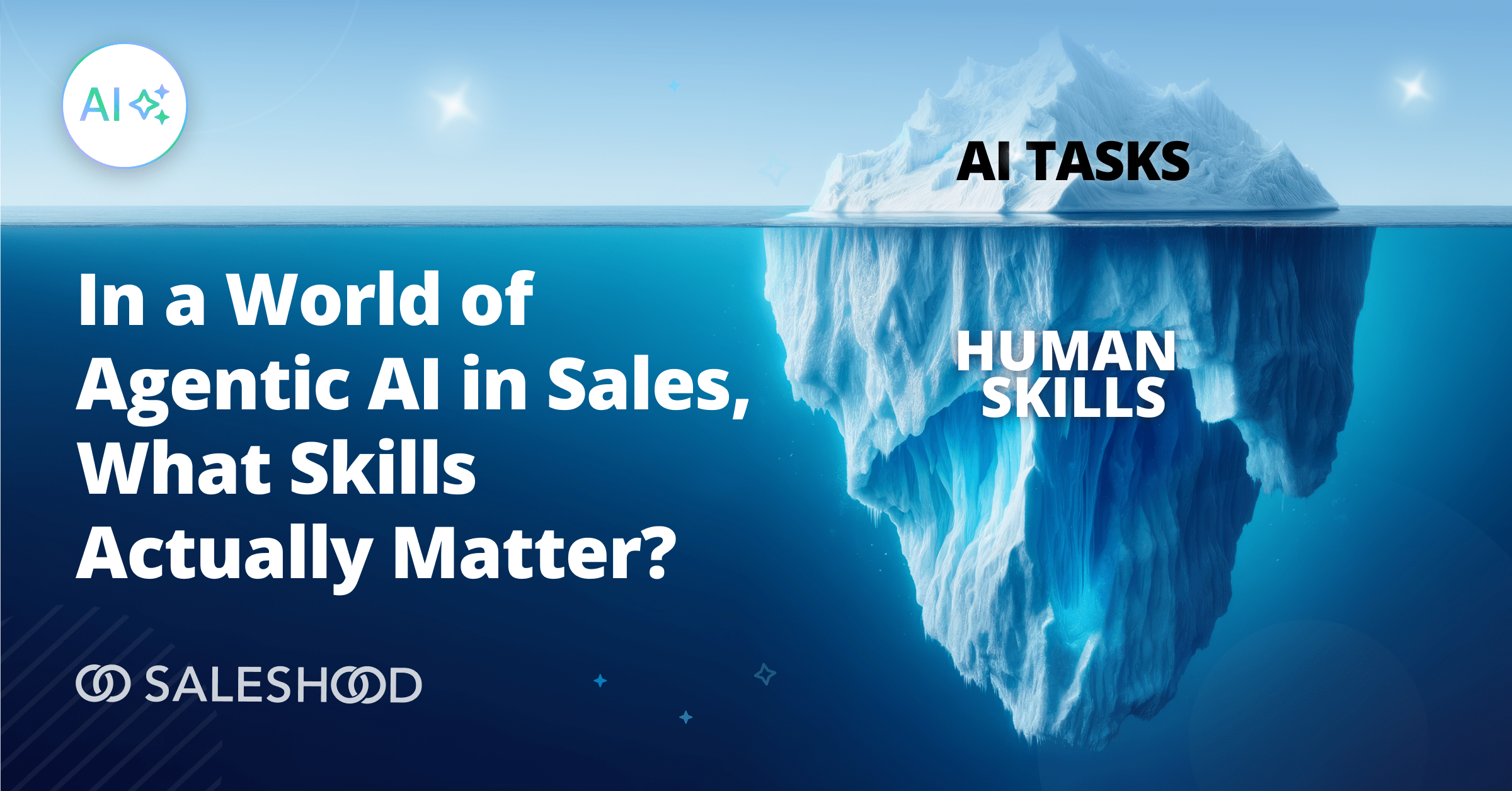
AI is powerful, but it is not a silver bullet. Sales still requires empathy, strategy, and human judgment. The real magic happens when managers use AI as a partner rather than a replacement. This section looks at how to strike that balance and what to keep in mind when rolling out AI coaching across your team.
Best Practices for Managers Using AI as a Co-Coach
AI is not here to replace managers. It is here to make them better. Think of it as an assistant that handles the repetitive work so managers can focus on what matters most: empathy, strategy, and coaching through complex deals. McKinsey found that leaders who use AI redistribute their time toward higher-value development, which makes every coaching interaction more impactful.
A smart way to use AI is to let reps review private feedback first. That way, they arrive at a coaching session already aware of their strengths and blind spots. The manager can then focus on building strategy and sharpening advanced skills. LinkedIn calls this a confidence booster that keeps coaching sessions focused and productive.
Overcoming Common Adoption Hurdles
Resistance to AI is natural. Some reps see it as surveillance instead of support. The key is to frame AI as a performance partner. Transparency is also critical. Start with pilot programs and show clear links between AI insights and real performance improvements.
It works best when reps see the benefit for themselves: faster ramp-up, sharper conversations, and higher quota attainment. When sellers connect the dots between AI feedback and better results, skepticism fades quickly.
How SalesHood Delivers Next-Generation AI Sales Coaching
It is one thing to talk about AI coaching in theory. It is another to see it in action. SalesHood has built a platform that brings together role plays, real-time analytics, and just-in-time coaching. In this section, we will walk through how the platform works and share results from customers who are already winning with it.
Platform Overview: AI Role-Plays, Just-in-Time Coaching, Real-Time Analytics
SalesHood takes the concept of AI sales coaching and turns it into daily practice. The platform simulates real customer conversations, provides nudges during live calls, and tracks metrics such as talk ratios and objection handling. Instead of waiting for quarterly training reviews, reps improve their performance every day. That steady stream of coaching compounds into stronger habits and better outcomes.
Customer Success Snapshots With Quantifiable Results
The impact is already clear in the market.
At StarCompliance, the sales team needed more than generic training. They wanted consistent messaging, sharper coaching, and faster ramp times. By leaning on SalesHood, they pulled all three together.
Within a few months, win rates on new logos (the percentage of prospective customers that a sales team successfully converts into paying customers) climbed 17 percent, sales cycles shrank by more than a third, and average selling price doubled. The shift was not just about efficiency, it was about giving reps the confidence and clarity to hit quota again and again. You can see the full story here.
Copado faced a different challenge. Their rapid growth meant onboarding new reps quickly without sacrificing quality. SalesHood’s AI-powered onboarding and coaching gave them that edge. In just 90 days, they raised win rates, increased rep participation, and grew average selling price, all while helping new hires ramp faster and sell with confidence. The details of their journey are available here.
These stories show the direct link between AI coaching and measurable revenue growth. It is not an experiment anymore. It is a proven advantage.
The Future of AI in Sales Coaching and Training Methods
AI coaching is moving fast, and the pace of change is only accelerating. What feels advanced today will soon become table stakes.
One exciting development is generative AI simulations. These tools create unique deal scenarios tailored to each rep’s industry, persona, or buyer objections. That means sellers no longer practice on generic scripts but instead sharpen their skills in scenarios that look and feel like the real thing.
Another shift is toward adaptive learning paths. Experts predict the rise of AI-powered capability academies that adjust training to each seller’s individual progress. No two reps follow the same journey, and AI ensures every path is personalized.
The third big trend is predictive revenue impact. By embedding AI across the coaching process, companies can do more than track lagging metrics. They can forecast performance risks before they appear.
For a closer look at how companies are preparing for this future, the SalesHood AI Role Play eBook provides practical frameworks to start building next-generation simulations today.
Traditional vs AI-Powered Sales Coaching
|
Aspect |
Traditional Coaching |
AI-Powered Sales Coaching |
|
Feedback |
Feedback arrives late and often relies on memory |
Feedback is immediate, delivered right after a call |
|
Scalability |
Limited by how much time a manager has |
Available to every rep at the same time, no bottlenecks |
|
Personalization |
Training is usually one-size-fits-all |
Every rep receives coaching that reflects their own style and deals |
|
Data Insights |
Notes and reviews are often subjective |
Analytics are predictive and based on real data |
|
Practice |
Role plays are generic and repeated |
Simulations adapt to industry, persona, and objections |
|
ROI Tracking |
Hard to measure and track consistently |
Clear analytics tie coaching directly to outcomes |
The contrast is clear. Traditional sales training methods are useful but slow and inconsistent. AI-powered coaching, on the other hand, is immediate, scalable, and tied directly to performance metrics.
Get Started With Sales Coaching Now
You cannot call AI sales coaching just a trend. Combined with human expertise, it is making a giant dent in the sales universe by helping sales teams ramp faster, coach smarter, and close bigger deals.
By embracing this shift now, leaders will be able to build teams that are sharper, more confident, and more consistent. Those who wait risk falling behind as competitors use AI to coach at scale and move faster.
Platforms like SalesHood stands combine real-time feedback, AI-driven role plays, and predictive analytics, helping teams embed coaching into the daily flow of selling.
Want to see AI coaching in action? Book a demo to explore how SalesHood can help your team ramp faster, coach smarter, and win bigger deals.
Frequently Asked Questions (FAQs)
Q: What is an AI Sales Coaching Agent?
An AI Sales Coaching Agent is an agent that helps reps practice, improve, and execute better in real sales conversations. It analyzes performance, identifies patterns, and delivers instant feedback right after each interaction. With AI role play and pitch practice, reps get real-time scorecards and coaching insights so they can quickly refine messaging, improve delivery, and drive more consistent outcomes
Q: How is AI sales coaching different from traditional coaching?
Traditional coaching is often delayed and difficult to scale, relying on workshops and limited manager bandwidth. AI coaching delivers instant, personalized feedback after every interaction, enabling reps to continuously practice and improve. This creates a consistent, scalable coaching experience across the entire team, driving faster skill development and better execution in the field.
Q: Will AI replace sales managers?
AI will not replace sales managers. The most effective approach is a hybrid model where AI acts as a co-coach, handling real-time analysis, scoring, and feedback, while managers focus on strategy, deal support, and human connection. This combination gives managers more leverage, allowing them to coach more effectively and focus on the moments that drive revenue.